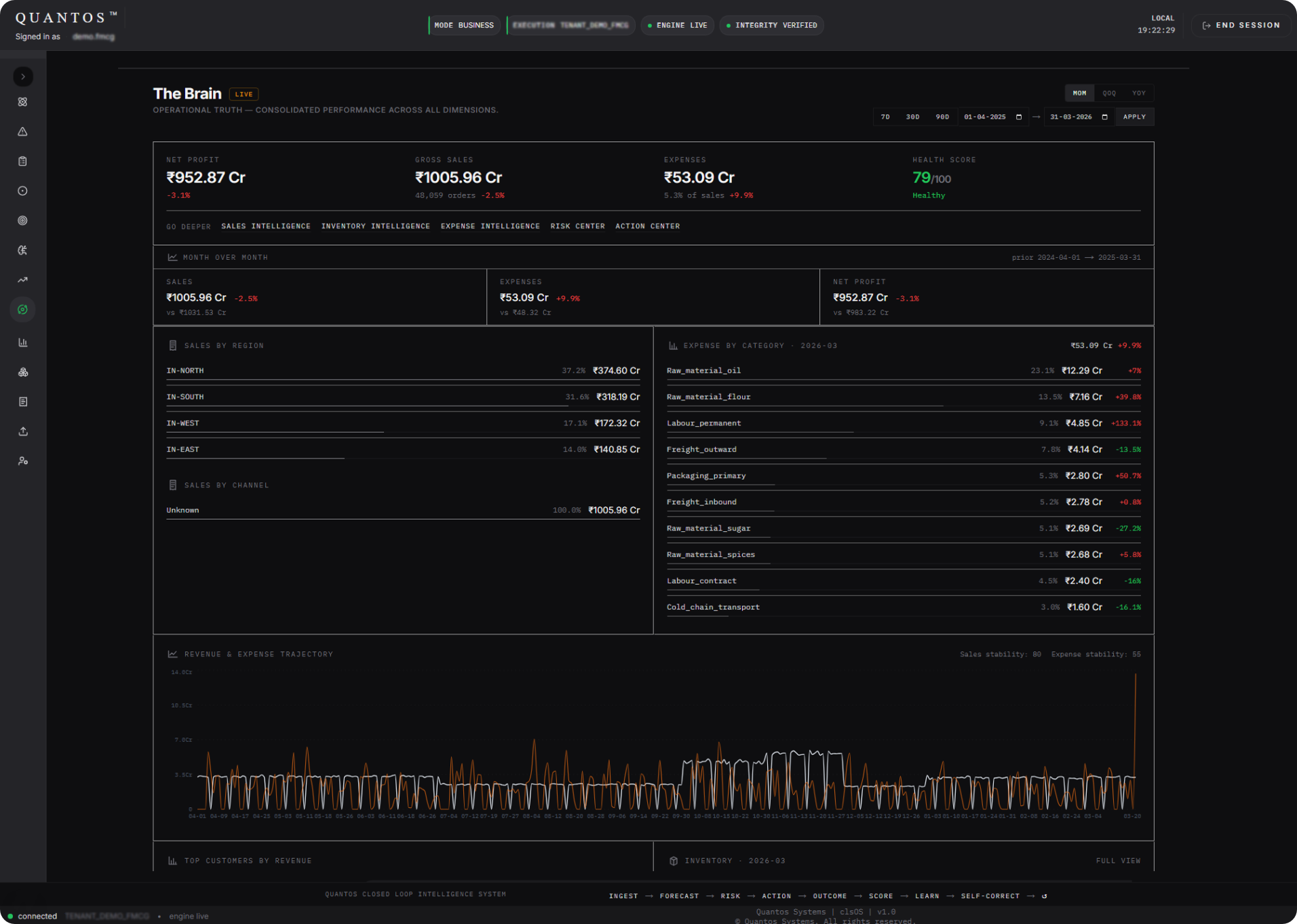
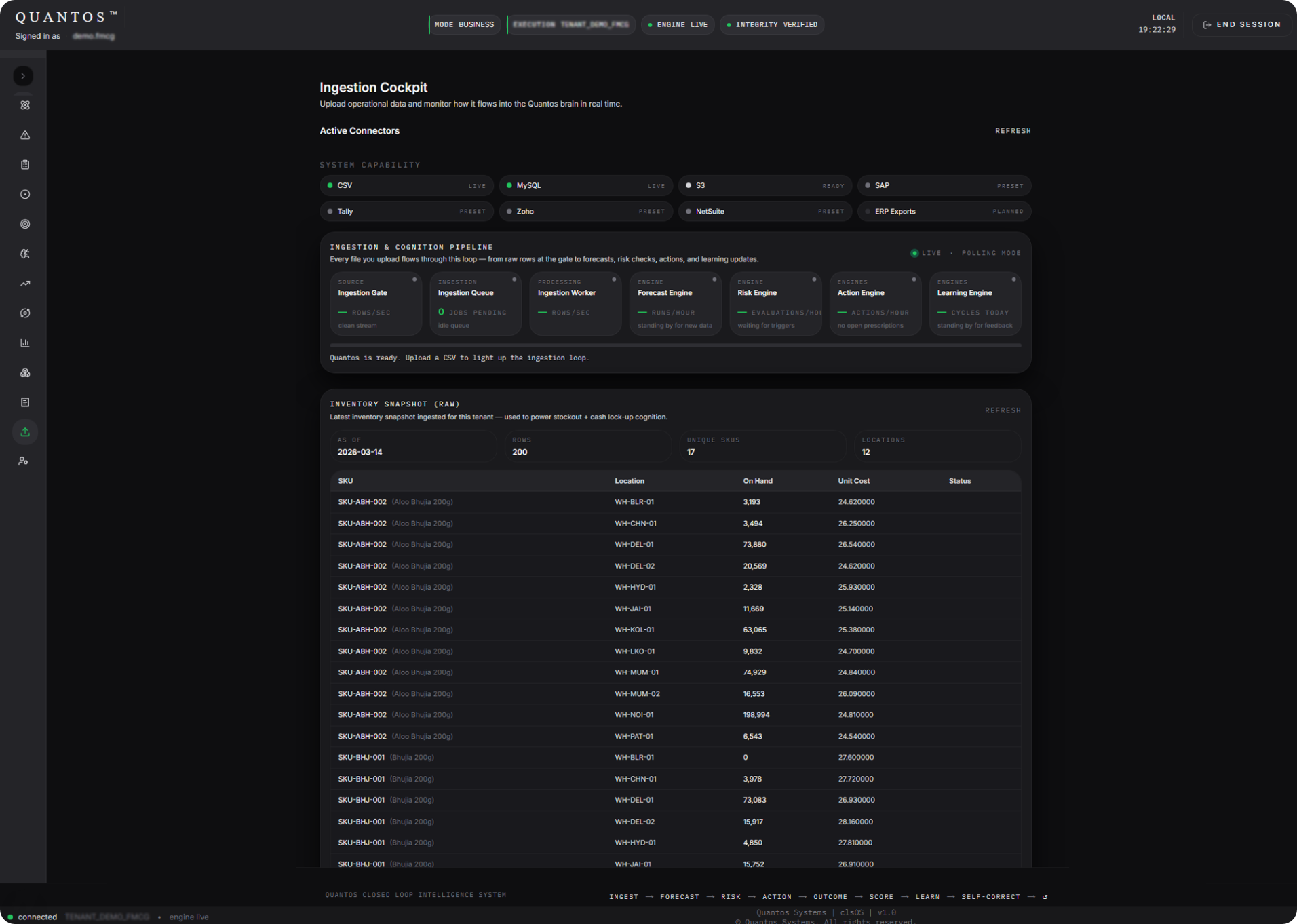
What enterprise systems do well. And where the loop still breaks.
Every company runs on reports. Reports tell you what happened last month. They don't tell you what's about to go wrong, who owns it, or whether the last decision actually worked. So the same mistakes keep happening — a milestone slip that costs ₹40 Cr, a batch that fails spec three weeks before launch, a margin that drifts quietly for six months before anyone notices. Nobody connected it. Nobody remembered. Next quarter, the report looks almost the same. So does the mistake.
AI can explain the signal. It cannot own the consequence.
An answer is not a decision. A recommendation is not an action. A dashboard is not control.
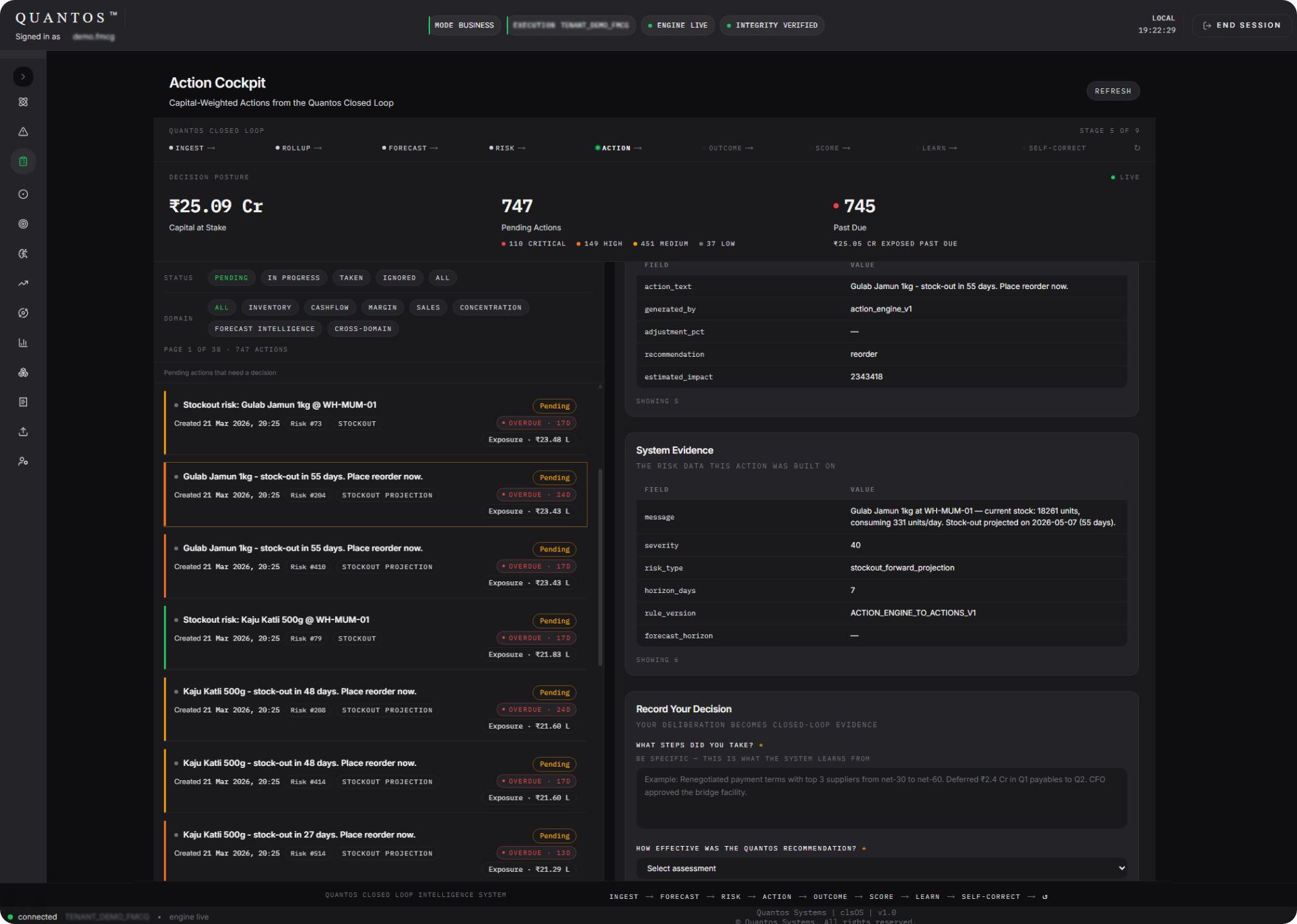
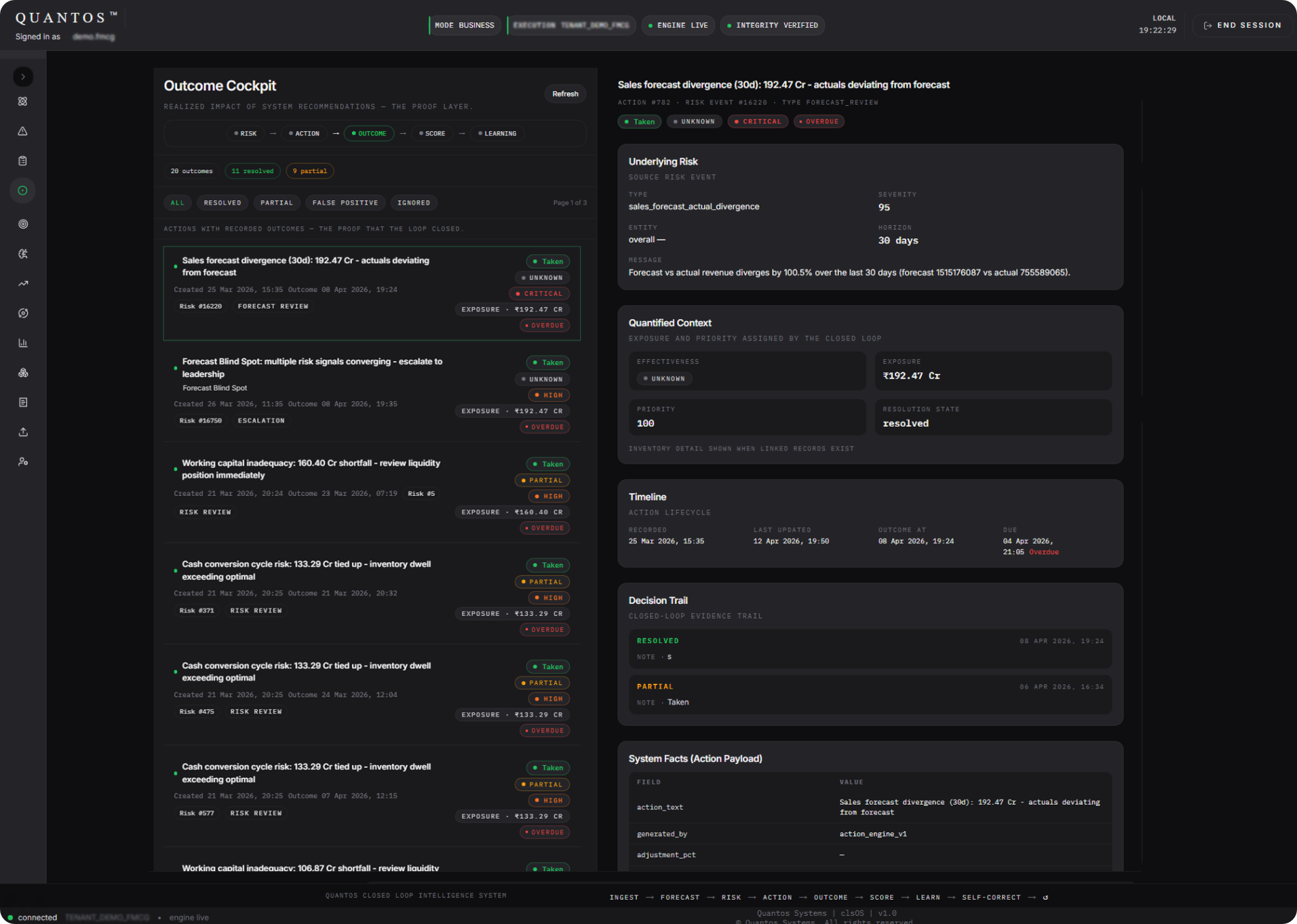
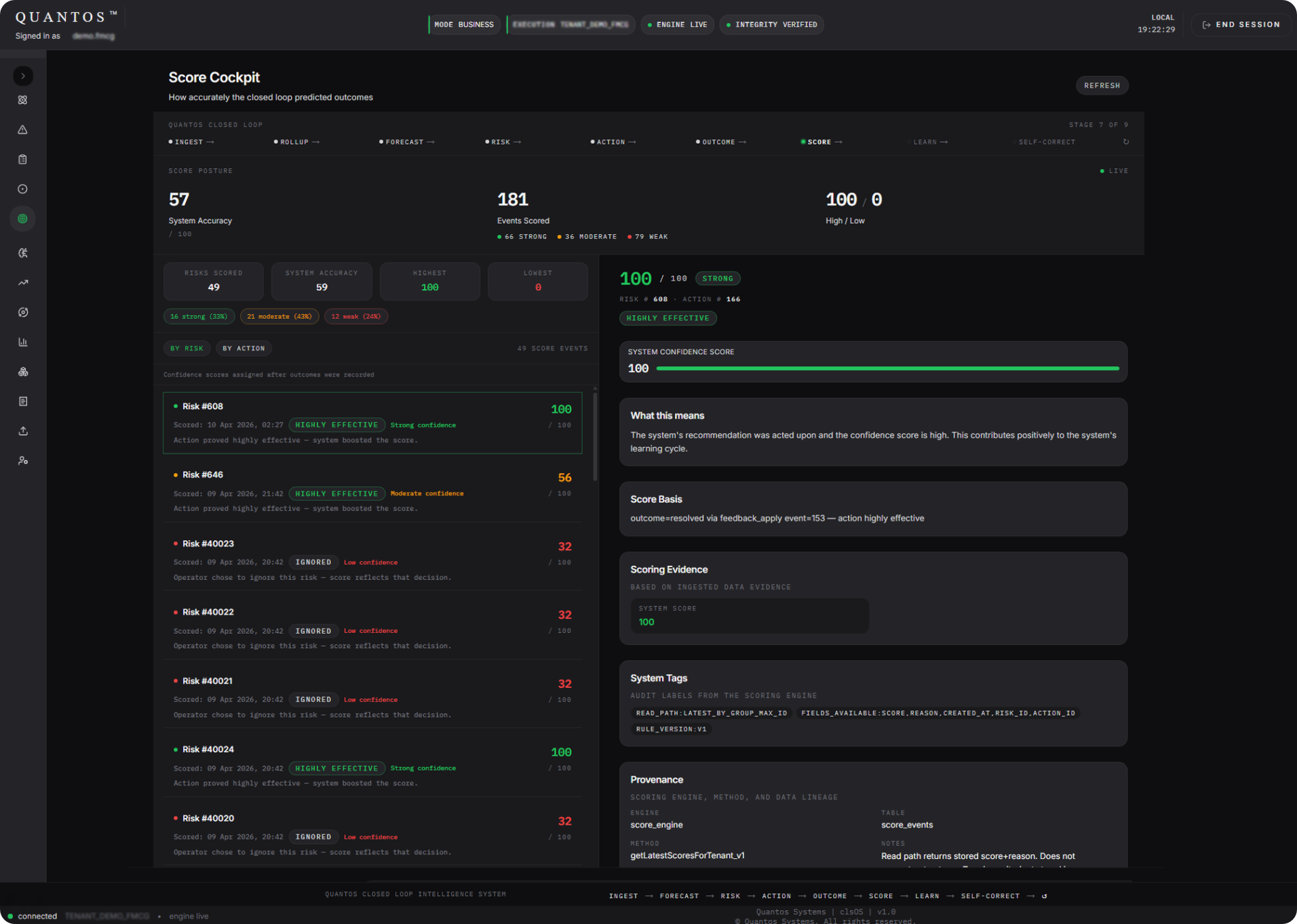
Until a system remembers what it predicted, records who acted, measures what happened, scores the decision, and carries that learning into the next cycle, the loop remains open.
Quantos closes it.
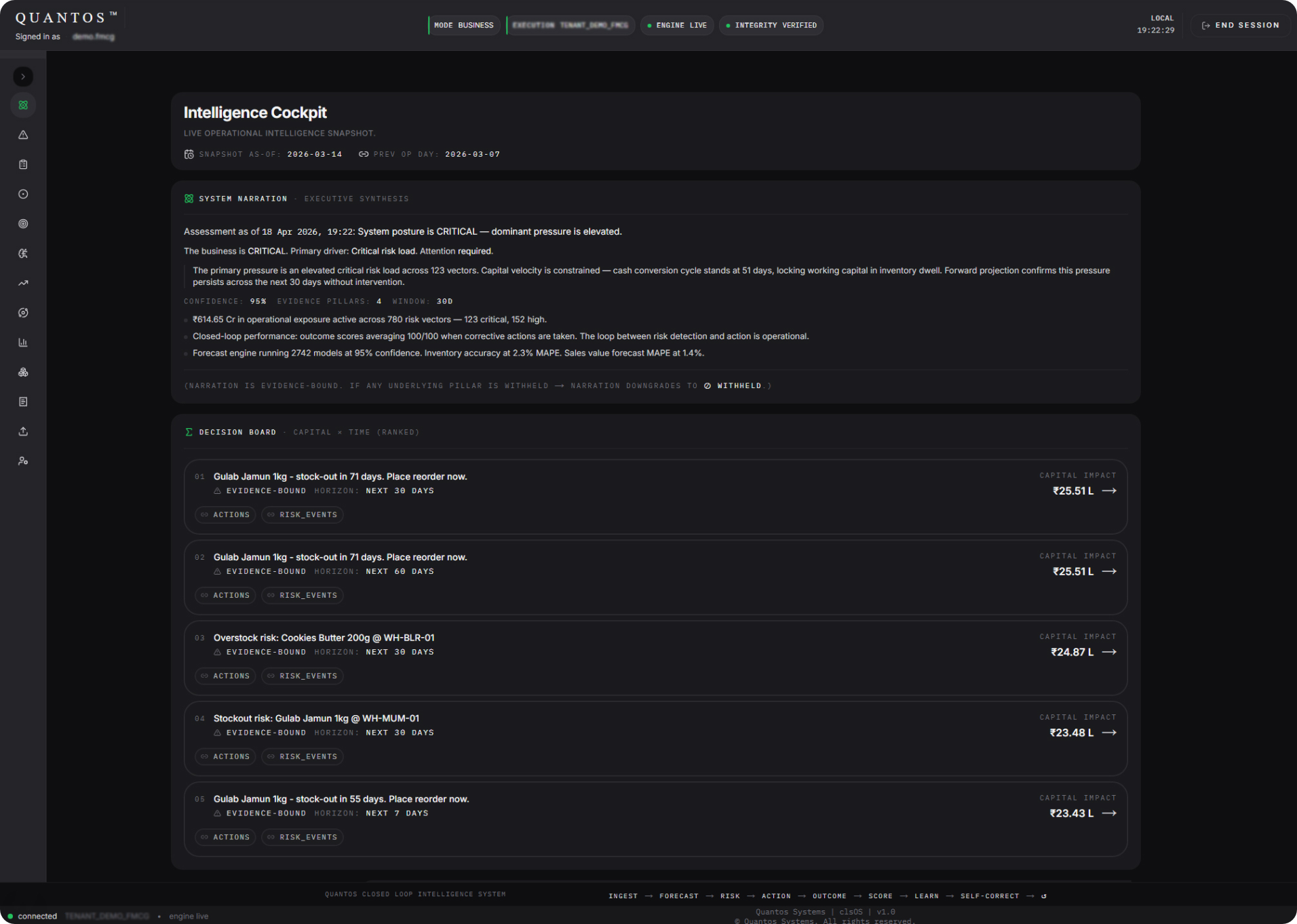
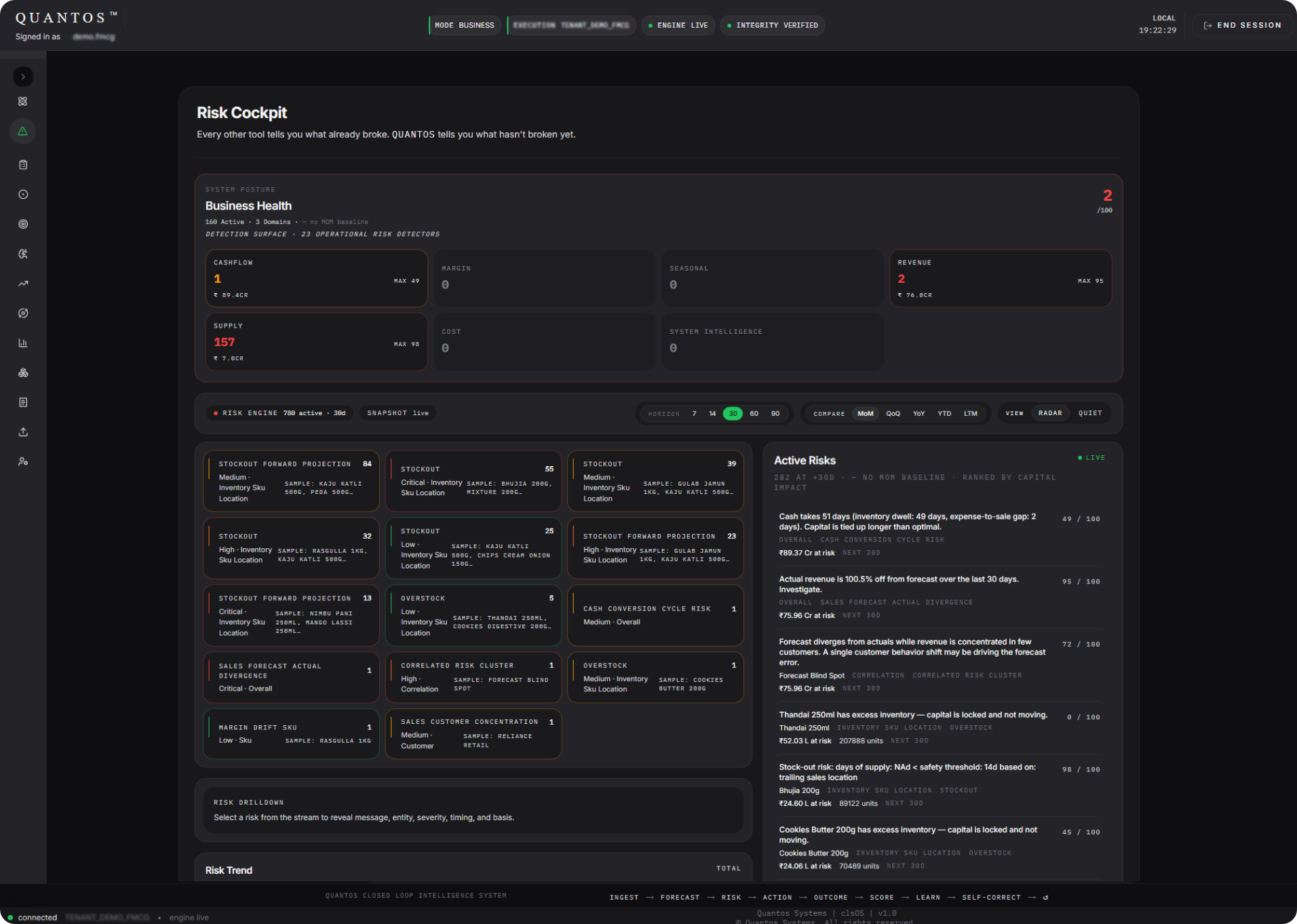
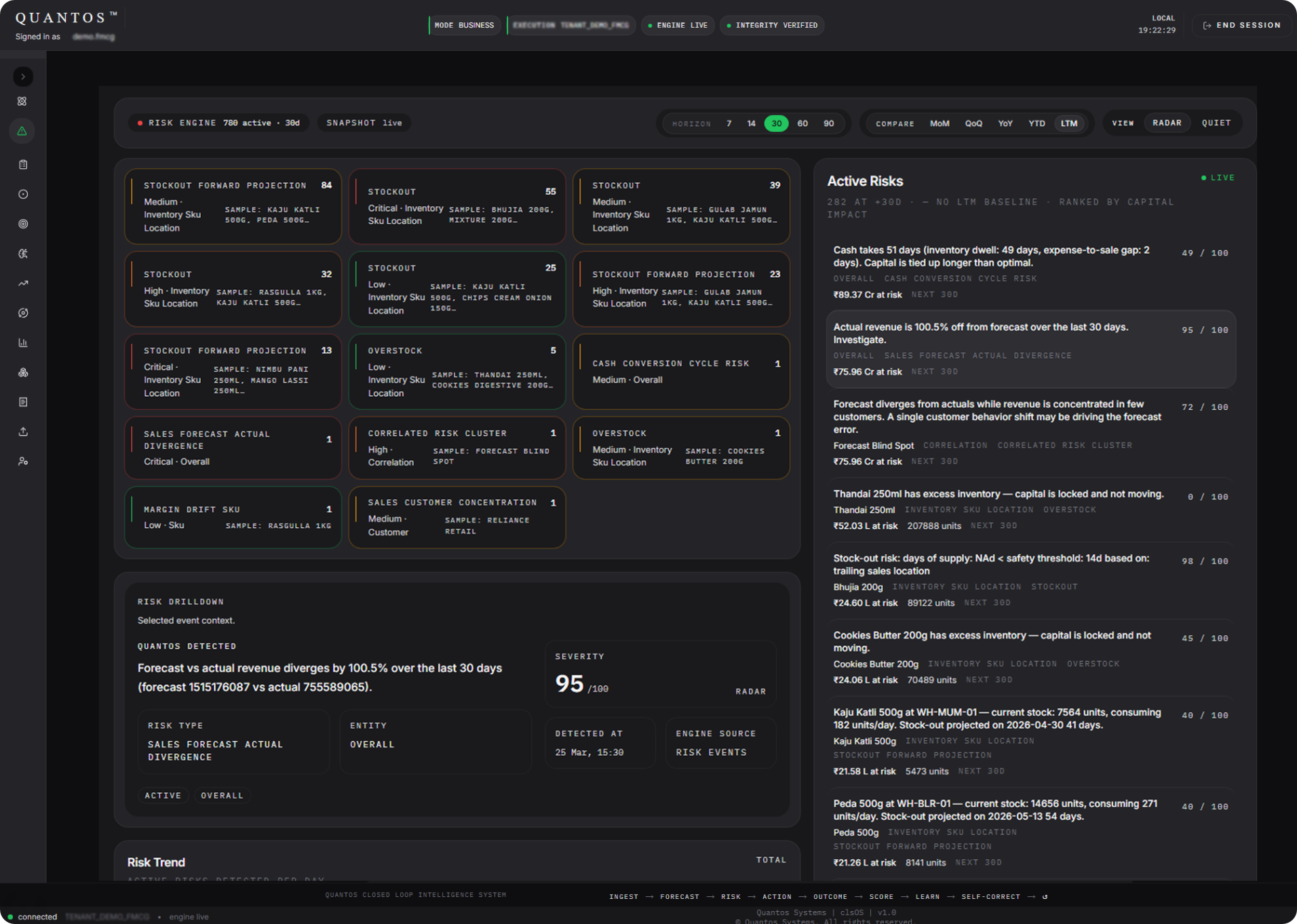
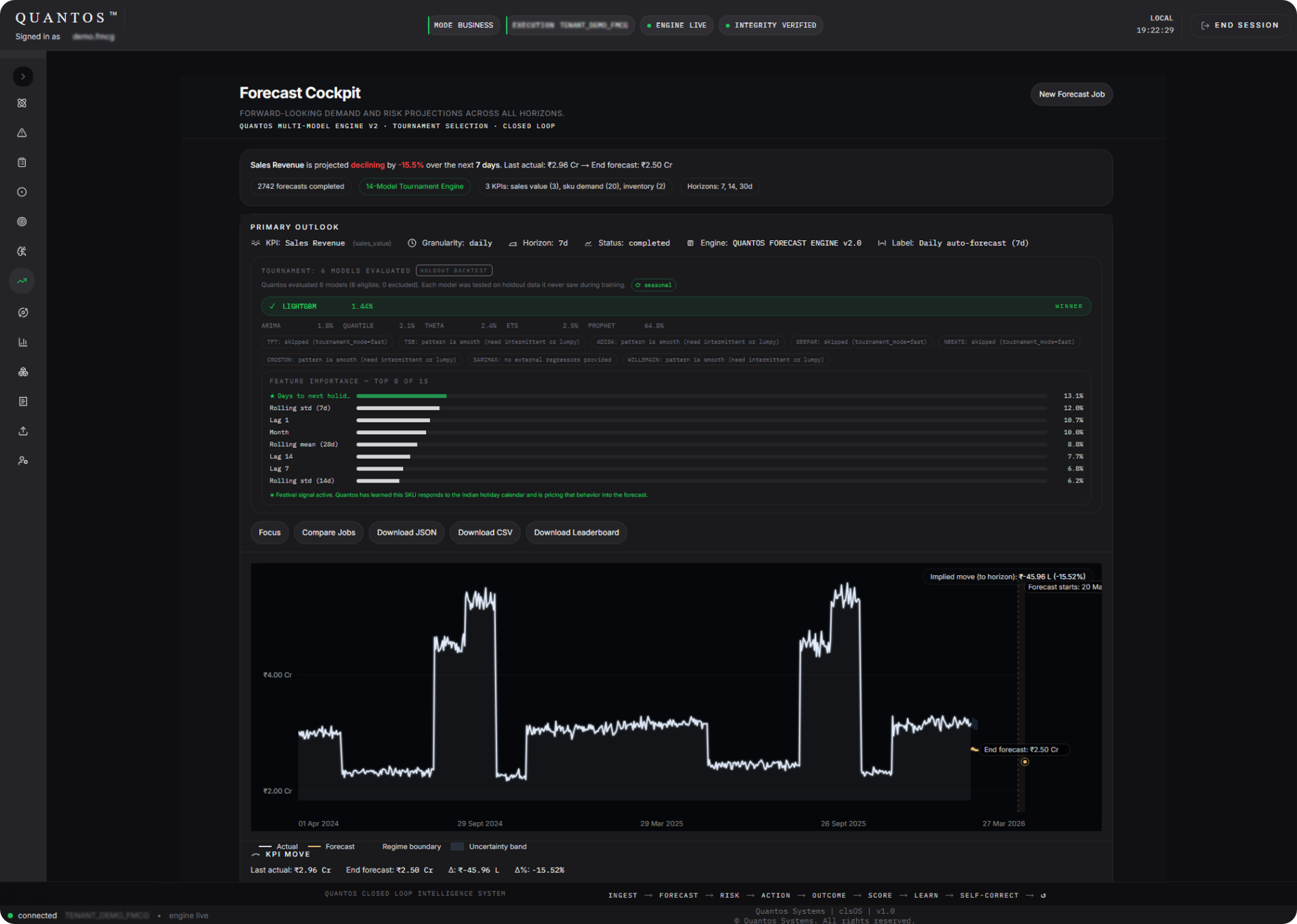
Quantos does not stop at seeing the risk. It prices the exposure, identifies when and where it is forming, and gives it an accountable owner.
When action is taken, Quantos watches what happens. It measures the outcome against the forecast, scores the decision, and carries the learning forward.
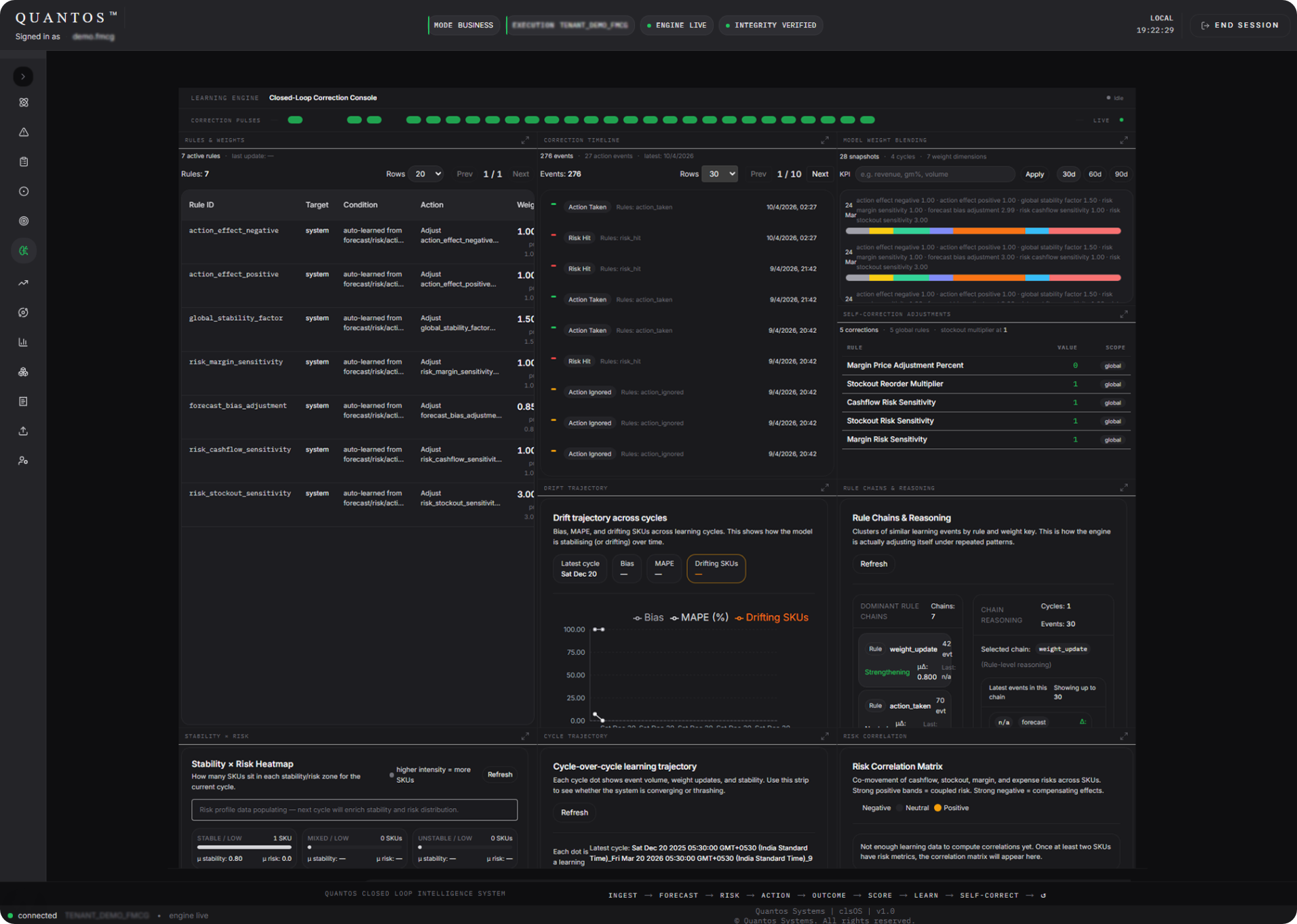
The next cycle does not begin from zero. It begins with memory.
People may leave. What the institution learned does not leave with them.
Same operational truth. Same governed system state. Same answer.
Quantos is not a black box. Every output carries its own evidence: source data, method, engine, system version, timestamp, decision, and outcome.
Years later, the complete decision can be reconstructed from the evidence that produced it.
Built to withstand audit, regulatory review, and legal scrutiny.
Quantos does not ask you to trust the answer. It shows its work.
The reason this category did not exist until now is structural. ERPs were built to record transactions. BI tools were built to visualise them. Planning systems were built to project them forward. AI platforms were built to explore patterns. None of them were built to check whether the decision that came out of the data was correct — because that would require the system to remember what it said, measure what happened, and adjust itself. A loop, not a line. The software industry spent forty years perfecting the line. Nobody closed the loop. Quantos did.
This is not a criticism of any system or the people who built them. It is a structural reality: the category that closes the loop did not exist. What no system was designed to deliver is what the user deserves from their own data — a closed loop that turns output into intelligence, and intelligence into better judgement, every cycle.