Enterprise & Industries
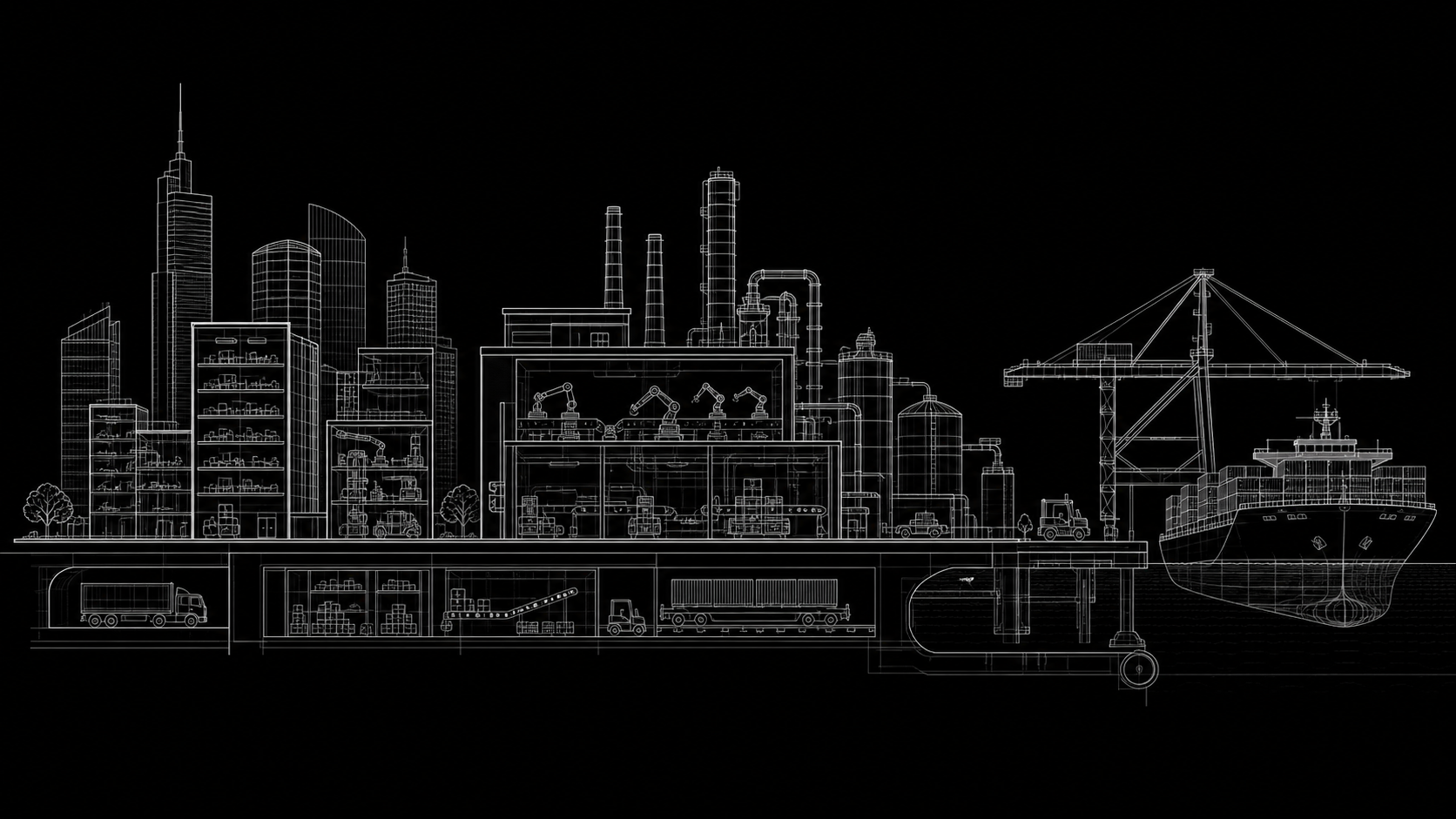
Commercial, Operational and Industrial Decision Environments.
Intelligence should remain under the control of the enterprise, institution, or defence organization it serves.
WHERE QUANTOS FITS
Quantos works above existing systems and carries governed intelligence into the environments where decisions are made.
OPERATING ENVIRONMENTS
Commercial, Operational and Industrial Decision Environments.
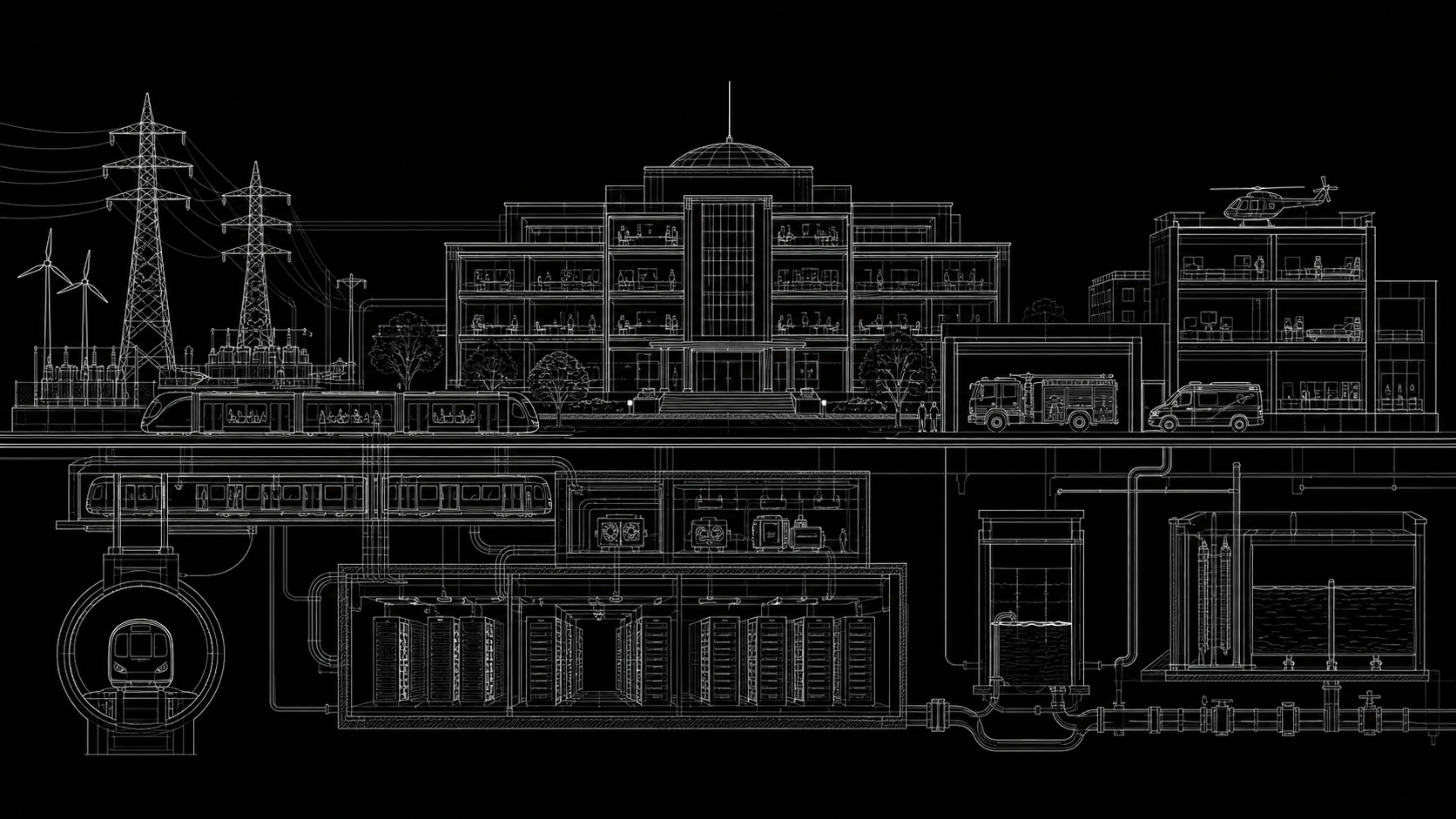
Public Institutions, PSU/DPSU and Critical Infrastructure.
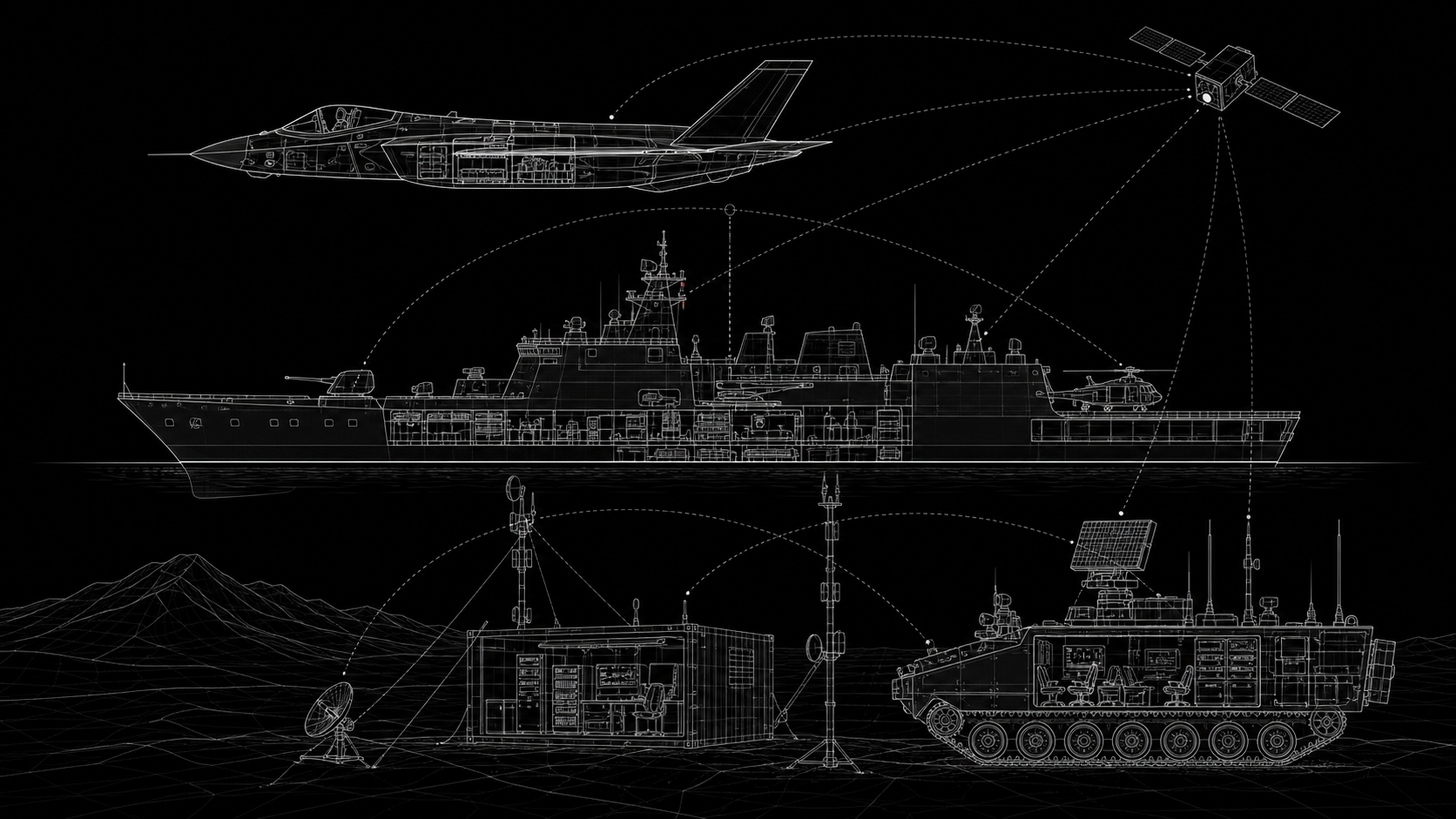
Defence, National Security and Mission Decision Environments.
EXISTING ENTERPRISE SYSTEMS / SOURCE OF TRUTH
ERP · CRM · SCM · Finance · MES
BI · Forecasting · Planning · AI
Sensors · Command · Mission · Field
OUTCOME → LEARNING → SELF-CORRECTION → REPEAT → QUANTOS IS BUILD TO PROVIDE CONTINOUS INTELLIGENCE.
For seventy years the machine did one half of the job perfectly. The West built systems of record, and built them with mastery every transaction, every operational fact, captured without error from the 1950s onward. The record was never the weakness. The decision was the half that had no home. What to do with the data the judgment, the correction, the learning the machine could not hold it, because the mechanism to hold it did not exist. So the system handed the decision to a human, and the human decided on experience, on gut. And every time, the intelligence behind that decision lived in the person, not the system. Then the person left retired, transferred, resigned and the intelligence walked out with them. Thirty years of judgment, gone in a farewell email; the institution reset to zero and called it turnover. That is the cost no one named: not a missing feature, a permanent leak. Quantos exists to close it. The decision, and the learning from it, finally lives in the system measured, scored, corrected, compounded, cycle after cycle. It does not retire. It does not transfer. It does not walk out the door. For the first time, the institution keeps its own intelligence.
LEO · UNIVAC
Operational calculation at machine scale
Open Loop
SAP · Oracle
Integrated enterprise records
Open Loop
BusinessObjects · Cognos · Qlik
Reporting and performance visibility
Open Loop
Salesforce · Palantir
Connected operational workflows
Open Loop
Tableau · Microsoft Power BI
Accessible dashboards & exploration
Open Loop
Anaplan · o9
Connected plans & scenarios
Open Loop
OpenAI · Anthropic Claude
Conversational answers & synthesis
Open Loop
CLOSED-LOOP INTELLIGENCE
Solves the structural break after intelligence.
Closed Loop
OPEN LOOP · THE WORLD’S STRUCTURAL DEFAULT
Open-loop systems produce intelligence and hand it to a human. The system ends there. The decision, the action, whether it worked and what to learn from it live inside that person. When the person leaves, the intelligence leaves with them, and decisions fall back to memory and gut. This is the world’s structural default not the enterprise’s fault.
CLOSED LOOP · WHAT QUANTOS BUILT
Closed-loop intelligence starts with the same input, but keeps going. Quantos shows forward risk in rupees and days, produces actions, checks the outcome, scores its own call, learns what worked in this enterprise and self-corrects. That correction feeds the next cycle, so the intelligence compounds.
OPEN LOOP · THE WORLD’S STRUCTURAL DEFAULT
Open-loop systems produce intelligence and hand it to a human. The system ends there. The decision, the action, whether it worked and what to learn from it live inside that person. When the person leaves, the intelligence leaves with them, and decisions fall back to memory and gut. This is the world’s structural default not the enterprise’s fault.
CLOSED LOOP · WHAT QUANTOS BUILT
Closed-loop intelligence starts with the same input, but keeps going. Quantos shows forward risk in rupees and days, produces actions, checks the outcome, scores its own call, learns what worked in this enterprise and self-corrects. That correction feeds the next cycle, so the intelligence compounds.
Self-Correct → Next Cycle → Repeat
Select your existing stack
See the role your existing platform already performs with strength—and the governed consequence loop Quantos adds above it without replacement.
SAP remains the enterprise backbone: preserving transactional truth, governing core processes and building demand, supply, inventory and operating plans at institutional scale.
The plan is authoritative, but the operating consequence still sits beyond the planning cycle. Quantos begins when that forecast must remain attached to the risk identified, the decision authorised and the result that followed.
One governed consequence record from forecast to realised outcomescored, learned from and carried into the next corrected forecast without replacing SAP.
Positioning standard. This comparison does not claim that established platforms are incapable of being configured to capture actions, outcomes or learning. It distinguishes what each platform is designed to make structurally unavoidable. In Quantos, closing the loop is the architecturenot an optional workflow.