Offerings / Industries

Quantos for Banking & Financial Services

A bank prices credit risk at origination and learns whether it was right at default and the entire distance between is governed by rules that reverse the income and demand the provision the moment the loan crosses the line. The early-warning signal that a loan is going bad forms in the data long before it becomes a non-performing asset: the cash flow that changes, the counterparty that stresses, the concentration that builds. But the systems recognise and provision it only after it crosses the regulatory trigger so the bank buffers a loss it could have caught, on a net interest margin already squeezed by costlier deposits. An entire decade was spent digging out of the last stress cycle for exactly this reason. Quantos is the one loop that closes the distance between the signal and the intervention while the asset can still be saved, under the bank’s own authority, every call auditable.

See the loss you provisioned before you could act
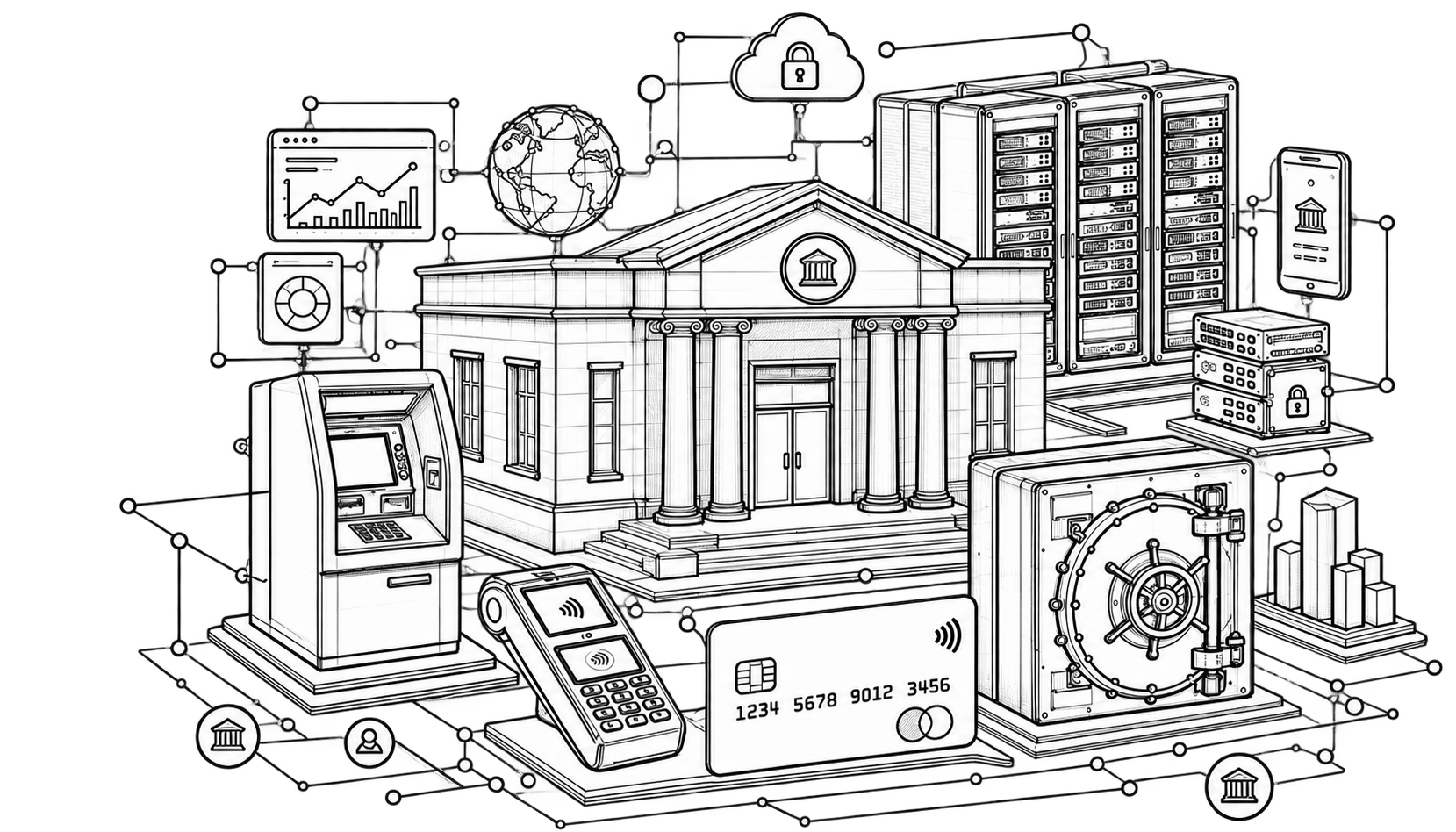
Banking and financial services systems line drawing

The operating reality

The risk is priced at origination and recognised only at the trigger.

Banking runs on a lag with a hard edge. The risk on a loan is priced at origination, on an assessment of a borrower’s future. Whether that assessment was right plays out over years. And the moment the loan crosses the regulatory line into non-performing, the rules are unforgiving: accrued income is reversed, interest moves to a cash basis, the provision is taken, and security value or borrower net worth cannot delay the recognition. The loss lands as a number on the balance sheet, fully formed, at the trigger.

But the loss did not begin at the trigger. It began in the signal that formed months earlier the operating cash flow that started to thin, the linked exposure that began to stress, the sector concentration that quietly built past prudence. That signal lives in the bank’s own data before the loan ever misses a payment. The window to act on it to restructure, to de-risk, to strengthen the security, to step back from a concentration is open while the signal is forming and closed by the time the ninety days are counted. And on a net interest margin already squeezed by the shift from low-cost deposits to costly term funding, every provision taken on a loss that could have been caught is margin the bank does not get back.

None of this is a failure of the credit officers, the risk teams or the recovery desks. It is the structural default of an industry whose systems were built to score a loan at origination and classify it after the trigger, never to close the loop between the early-warning signal and the intervention while the asset could still be saved. And the judgement a seasoned credit officer has for which signal is the dangerous one leaves with them, so the next cycle relearns it at the price of the provisions taken in between.

Where credit cost and margin are won or lost

The calls that decide the book, made after the signal and before nothing.

The stress caught at ninety days that formed at ninety days earlier

A borrower’s cash flow thins, the account limps, and the signal sits in the data while the loan is still standard. Recognised only when it crosses into non- performing, it arrives as a provision when a restructure or a de-risking taken while it was forming might have held the asset. The window to act was open and unwatched; the loss it became was booked in full.

The concentration that builds past prudence unseen across the book

Exposure gathers in a sector, a group, a geography each facility sound on its own, the aggregate quietly dangerous. A downturn in that segment turns a comfortable book into a correlated loss, and the concentration was building for quarters, visible to no desk that saw only its own portfolio slice. The one picture that would have flagged it never formed in time.

The fraud and leakage that form as a pattern and settle as a number

Individual transactions clear individual controls. The pattern across them the network, the mule, the anomaly, the AI-enabled attack now ranked the sector’s top risk forms below the level any single check can see, and lands as operational loss. The moment to intervene was while the pattern was forming, and no system that held the book as one saw it then.

A book seen only when the quarter is closed

Leadership sees GNPA, credit cost and provision coverage in the quarterly result, in arrears, when every intervention, restructuring and exposure decision that picture would have informed is already made or missed. The book is run on a rear- view of itself precise about last quarter’s slippage, blind to the stress forming in it right now.

These are not four problems for four tools. They are one failure a decision separated from its outcome by a lag the systems recognise only at the trigger surfacing across credit stress, concentration, fraud and provisioning at once. No single system connects the signal to the intervention, and none of them was ever built to.

Book-wide operating model

One loop across the whole book closing the gap between the signal and the intervention.

Every system a bank runs today acts at one point in the life of a loan. The core- banking platform the Finacle or the Flexcube records the transaction. The risk engine scores the borrower at origination. The fraud and AML systems flag the suspicious event. The GRC and provisioning stack classifies the asset after it crosses the regulatory line. Each is excellent at its own point, and each hands its output to a person after that point has passed. They score the loan and classify the NPA; not one of them closes the loop between the signal that a loan is turning and the intervention that could still save it.

Quantos is that loop. It sits above the stack you already run and reads the book as one live position exposure, cash flow, counterparty, concentration and behaviour connected, not a scoring engine and a provisioning report that meet at the quarter. It does not wait for the ninety days. It catches the early-warning signal as it forms and surfaces the forward risk in money and time while the asset can still be saved: this exposure is stressing toward slippage, this concentration is building past prudence, this pattern is forming into loss here is the intervention, here is why it has to be made now, before it is a provision. It hands that call, with the full evidence trail, to the credit and risk authority who own it it does not lend, it does not classify the NPA, it does not set the provision, it does not replace the regulator’s framework. It watches what the exposure then did. It scores its own call against the slippage and the recovery that landed. It learns which signals truly precede default. And it corrects what the next underwriting watches for, so the risk priced at origination is sharpened by every signal the last cycle scored. The credit officer’s instinct for a turning loan becomes the institution’s, not the individual’s.

This is not a better risk engine, a smarter core or another provisioning module it is not a banking point-solution at all. It is a deterministic closed-loop intelligence system, and banking is simply the environment where the lag between a decision and its consequence is governed by the hardest recognition rules in industry and the margin that absorbs the miss is thinnest. Those systems score and classify, and stop. Quantos decides, proves and improves across the whole book as one. The industry has spent a decade getting better at classifying the NPA. Quantos closes the loop that turns a signal into one.

Evidence from the credit cycle

The credit cost you booked, against the cost the loop would have held.

Read the incumbents’ own words. A core-banking platform records the account. A risk engine scores at origination. A fraud tool flags the transaction. A GRC system classifies and provisions. Every one of them ends at the same place: a record, a score, or a classification, handed to a person at a single point in the loan’s life. None of them checks whether the signal was acted on in time, scores itself against the slippage, or corrects the next underwriting. None of them closes the loop because none of them holds the loan from the forming signal to the outcome as one.

Quantos holds the signal it flagged, the intervention it recommended, whether the bank acted, and what the exposure then did. So it can show the one thing no core or risk system can: the credit cost and the slippage the book actually carried, against the cost and slippage it would have carried had every signal been acted on while the asset could still be saved. The distance between them is the loss the open loop let through drawn in the bank’s own provisions, its own margin, its own recovery not an estimate, not a benchmark, the loss that was really there and really preventable.

And the shape is the danger every credit cycle carries. The gap widens, because a signal missed on one exposure is not one provision it is the same blind spot, repeating across every loan that shares its pattern, until it is the concentration or the segment stress that defines a bad year. Quantos holds one discipline here without exception: the gap is shown, not filled. It never invents a flattering version of the book’s history, and it never fabricates a number a regulator would question. It shows, with evidence, the credit cost that was truly avoidable because for a decision that answers to the RBI and moves the margin, an answer you can audit is the only one worth acting on.

Why this cannot be answered by a better risk engine

Three things no system of record can do, at any price.

It draws the world that did not happen

Because Quantos alone holds the signal it flagged, whether you acted on it and what the exposure then did, it can show the credit cost you would have carried had every signal been acted on in time against what the book actually booked. No core platform, no risk engine, no provisioning system can draw that line, because none of them carries the outcome of its own advice. It is the one view in the bank a competitor cannot copy, because copying it means closing the loop, and they have not.

It keeps a scored record of every call it ever made

Every early-warning signal, every intervention, and whether it was right, held permanently a provable track record of the system’s own judgement, cycle after cycle, built to the evidentiary standard a regulator expects. Not a report that is filed each quarter, but an accumulating body of evidence that says, in your own book, here is what we called and here is how it slipped or held. No system of record can produce it, because none of them ever kept the score of its own decisions.

It is the only system that gets better every cycle

Your core and risk systems are exactly as good today as the day they were configured. Quantos is not. Every cycle it scores its own call, learns which signals truly precede default and sharpens what the next underwriting watches for so the book it protects this year catches stress the one last year would have missed. It compounds. A system of record can only ever classify the loss after it lands. Quantos closes the gap that lets it form.

This is why Quantos is not a better banking tool. It is a different category of enterprise intelligence a deterministic closed loop that decides, proves and improves and a book is simply where the loop it closes protects both the margin and the capital.

Proof on your own book, not a projection

We do not ask you to trust a forecast. We replay your last cycle, exposure by exposure.

A forecast is a claim about a future you can argue with. Quantos offers something no argument survives: your own book’s history, replayed. Run the loop backward across the cycle the bank has already lived, and watch every call it would have made appear in sequence the exposure flagged as stressing before it slipped; the concentration named as it built past prudence; the fraud pattern caught while it was forming. Each one timestamped ahead of the provision it saw coming.

This is not a demonstration built on our data. It is built on yours, and it settles the only question a Chief Risk Officer actually asks: not “can this system score,” but “would it have held the credit cost on my book, on the exposure that actually became the provision.” The loop scores itself against the slippage that truly landed, in the open, and lets you judge the record before you ever rely on it. No other system can offer that, because no other system held the loan from signal to outcome as one long enough to have the record.

Where Quantos sits

Your systems remain. Quantos closes the loop above them.

Quantos does not ask a bank to replace anything. The core-banking platform, the credit-risk and scoring engines, the fraud and AML systems, the GRC and provisioning stack they stay, and they stay the systems of record. They were built to record, score, flag and classify, and they do it well. And the decisions that must stay with the bank and its regulator who is lent to, how an asset is classified, what is provisioned remain entirely with the credit and risk authority, under RBI norms. Quantos makes none of them.

What the existing stack was never built to do is hold the loan from the forming signal to its outcome as one and carry the decision forward: to connect the early warning to the intervention, decide while the asset can still be saved, measure the slippage, score the call, and keep the lesson when a credit officer leaves. That layer has simply never existed. It exists now, it is the only thing Quantos adds, and it is deterministic, governed and evidenced end to end no black box, no fabricated output, every call auditable to leadership and the regulator alike. The bank keeps everything it has built and gains the layer that acts on the signal before it becomes the provision.

For the people who own the book and the capital

What banking leadership asks first.

Is this a core-banking, scoring or provisioning system?

No. Those record, score at origination and classify after the trigger. Quantos closes the loop between them surfaces the early-warning signal before a loan goes bad, prices the forward exposure in money and time while the asset can still be saved, drives the decision under the bank’s authority, scores it against the slippage and corrects the next underwriting. Recording and classifying are where they end. It is where Quantos begins.

Why do we provision for losses we could have prevented?

Because risk is priced at origination and recognised only after the regulatory trigger. The signal forms in the data before the loan goes bad, but nothing connects it to the intervention while the asset can still be restructured or de-risked. Quantos closes that loop between the forming signal and the action.

Does Quantos make credit decisions or classify NPAs?

No. Lending, NPA classification and provisioning stay entirely with the bank’s credit and risk authority, under RBI norms. Quantos surfaces the risk, governs an accountable and auditable response, and scores the outcome. It closes the loop; it does not remove the credit officer or the regulator from it.

How do we act on a call we cannot see inside?

You do not have to. Quantos is deterministic every call traceable to its evidence, reproducible, governed. No black box, no hallucination. For a decision that moves credit cost and answers to the RBI, an answer you can audit is the only one worth acting on.

Quantos Systems · Banking & Financial Services

Every loss sent a signal first.Nothing was built to act on it.Now something is.