Offerings / Industries

Quantos for Pharmaceuticals

You decide the batch today and learn whether you were right months or years later at the inspection, in the market, in the recall, with no warning. The deviation is recorded, the CAPA closes, the batch releases. Whether it was truly right surfaces only when the regulator pulls it nationwide or writes the observation that suspends the licence. That lag is not a documentation gap. It is the difference between a running plant and a closed one. Quantos is the one loop that closes it while the next batch can still be corrected, under qualified authority, every call auditable.

See the recall you released before you could see it
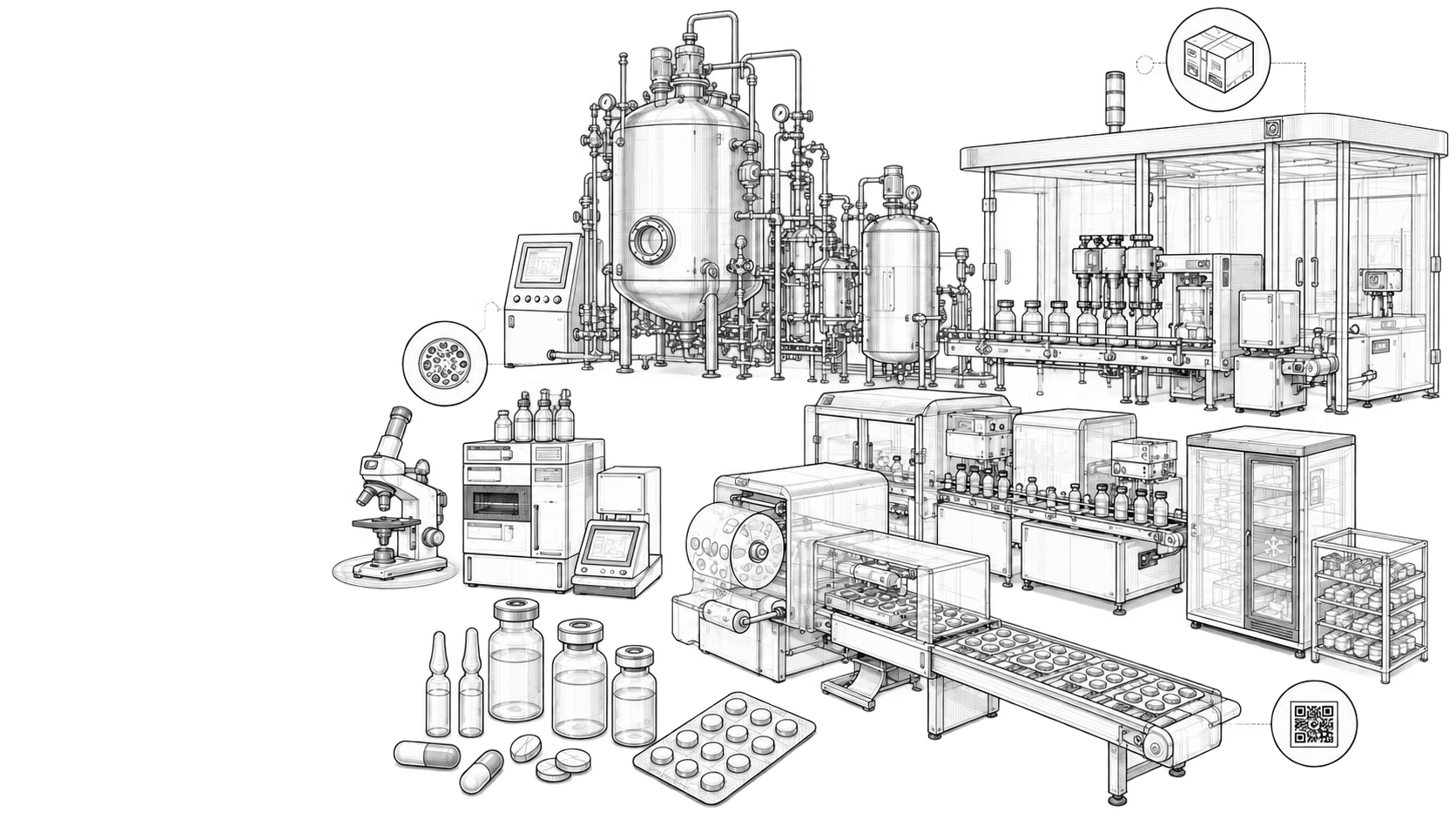
Pharmaceutical production shown in technical X-ray linework

The operating reality

The failure is decided at the batch and discovered at the inspection.

Pharmaceutical manufacturing runs on the cruelest lag in industry. The decision release this batch, close this deviation, accept this parameter is made now, on the floor and in the lab. The consequence the substandard flag, the regulatory observation, the recall, the suspended licence lands months or years later, and lands without warning: a quality regulator pulls the batch from pharmacies nationwide with no advance notice to the facilities carrying it. Hundreds of medicines are flagged as not-of-standard-quality in a single quarter, and each flag is a recall that was set in motion long before it surfaced.

The reason quality keeps slipping while documentation keeps improving is structural, and it is precise. A deviation is not one event it is a signal that every batch sharing its cause will fail the same way, until someone connects the deviation to the outcome to the correction. But that connection is exactly what the plant’s systems were never built to make. The deviation is logged in one silo, the lab result in another, the batch record in a third, the supply signal in a fourth. Each is recorded impeccably. None of them is closed. So the CAPA closes on paper, the same failure repeats in production, and the pattern surfaces as a recall a year later precise about what went wrong, far too late to have stopped it.

None of this is a failure of the QA teams, the production heads or the Qualified Persons. It is the structural default of an industry whose systems were built to document compliance and report it after the fact, never to close the loop between a decision and its regulatory and market consequence while the next batch could still be corrected. And the hard-won judgement of a veteran QA leader the instinct for which deviation is the dangerous one leaves with them, so the site relearns it at the price of the batches lost in between.

Where the licence and the margin are won or lost

The calls that decide the batch, made blind to their own consequence.

The deviation that closes on paper and repeats in production

A deviation is investigated, a CAPA is written, the record is closed and because nothing connects that deviation to the next batches that share its cause, the same failure recurs, unseen, until it is the pattern a regulator finds. One deviation handled well in isolation is not the same as a cause closed across the process. The distance between them is the recall.

The batch released on a signal no one connected in time

A parameter drifts inside tolerance, a trend forms across the lab data, a stability signal appears each visible in its own system, none of them assembled into the one picture that says this batch, or this product family, is heading for a problem. The window to hold, re-test or investigate was open before release. Nothing surfaced it as a decision while it still mattered.

The API shortage that becomes a stock-out and a lost tender

A supply signal on an imported API forms weeks before it becomes a production gap and with heavy dependence on a single source country, that gap becomes a market shortage, a missed institutional tender, a scheduled formulation gone unprofitable under a price ceiling. The supply, quality and commercial decisions live in separate systems that meet only when the shelf is already empty.

A network of sites seen only when the audit or the quarter lands

Corporate quality and operations see the whole facility network in the periodic review, in arrears, when every disposition, investigation and supply decision that picture would have informed is already made. The network is run on a rear-view of itself precise about last quarter’s deviations, blind to the observation forming across its sites right now.

These are not four problems for four tools. They are one failure a decision separated from its consequence by the entire regulatory lag surfacing across deviation, release, supply and inspection at once. No single system sees the batch decision through to its outcome, and none of them was ever built to.

Batch genealogy and quality control

One loop above the MES, the LIMS and the QMS closing what all three leave open.

Here is the uncomfortable truth the rising recall numbers prove: every plant already has the systems, and quality is getting worse anyway. The MES executes the batch record. The LIMS holds the result. The QMS logs the deviation and closes the CAPA. The ERP the SAP or the Oracle plans the supply. Each is an excellent system of record for its own silo. And each of them stops at the same place: it records the event, presents it to a person, and goes dark on whether the decision that person made was right. They are perfect witnesses. Not one of them is a loop.

Quantos is the loop they are missing. It sits above the stack you already run and reads the plant as one live position deviation, lab result, batch, stability and supply connected, not four silos reconciled at the audit. It does not wait for the review. It connects a deviation to every batch that shares its cause and surfaces the forward risk of a recall, an observation, a shortage in money and days, while the next batch can still be held. It hands that call, with the full evidence trail, to the Qualified Person and QA who own it it does not release the batch, it does not make the quality determination, it does not replace the regulator’s authority. It watches what the disposition actually produced. It scores its own call against the inspection and the market. It learns which signals truly precede failure. And it corrects what the plant watches for on the next batch so the deviation that would have become next year’s recall is closed at its cause, now. The lesson stays with the institution, not the QA leader who leaves.

This is not a better QMS, a smarter MES or another compliance dashboard it is not a pharma point-solution at all. It is a deterministic closed-loop intelligence system, and pharma is simply the environment where the lag between a decision and its consequence is most punishing and the cost of leaving the loop open is a licence. Those systems document the plant and stop. Quantos decides, proves and improves across every site as one. The industry has spent a decade getting better at recording the deviation. Quantos closes the loop that turns a deviation into a recall.

Evidence from the batch record

The recalls you took, against the recalls the loop would have closed at the cause.

Read the incumbents’ own words. An MES vendor promises the electronic batch record. A LIMS promises the managed result. A QMS promises deviation and CAPA tracking. An ERP promises supply visibility. Every one of them ends at the same place: a record, or a workflow, handed to a person after the fact. None of them checks whether the disposition held, scores its own call against the inspection, or corrects the cause before the next batch carries it. None of them closes the loop because none of them holds the batch decision and its regulatory consequence as one. The proof is in the numbers the whole industry can see: every plant has these systems, and recalls are still rising.

Quantos holds the signal it flagged, the action it recommended, whether the plant acted, and what the batch and the inspection then did. So it can show the one thing no MES, LIMS or QMS can: the recalls, observations and shortages the network actually took, against the ones it would have avoided had every call been closed at its cause while the next batch could still change. The distance between them is the exposure the open loop let through drawn in the plant’s own money, its own remediation cost, its own lost output not an estimate, not a benchmark, the failure that was really there and really avoidable.

And the shape is the whole danger of this business. The gap widens, because a cause left unclosed is not one bad batch it is written into every batch that shares it, compounding silently until it is the pattern a regulator finds and a market loses trust in. Quantos holds one discipline here without exception: the gap is shown, not filled. It never invents a flattering version of the plant’s history, and it never fabricates a record data integrity is preserved to ALCOA+ expectations, because in this industry a fabricated number is itself the violation. It shows, with evidence, the exposure that was truly avoidable because for a decision that answers to a regulator and touches a patient, an answer you can audit is the only one worth acting on.

Why this cannot be answered by a better QMS

Three things no system of record can do, at any price.

It draws the world that did not happen

Because Quantos alone holds the call it made, whether you acted on it and what then occurred, it can show the recalls and observations you would have avoided had every cause been closed against what the network actually took. No MES, no LIMS, no QMS can draw that line, because none of them carries the outcome of its own advice. It is the one view on the site a competitor cannot copy, because copying it means closing the loop, and they have not.

It keeps a scored record of every call it ever made

Every signal, every intervention, and whether it was right, held permanently a provable track record of the system’s own judgement, batch after batch, built to the same evidentiary standard a regulator demands. Not a workflow that closes and is filed, but an accumulating body of evidence that says, in your own data, here is what we called and here is how it landed. No system of record can produce it, because none of them ever kept the score of its own decisions.

It is the only system that gets better every batch

Your MES, LIMS and QMS are exactly as good today as the day they were validated. Quantos is not. Every batch it scores its own call, learns which signals truly precede a failure and sharpens what the plant watches for so the network it protects this quarter catches causes the one last quarter would have missed. It compounds. A system of record can only ever describe a plant that keeps making the same mistakes. Quantos closes them out one cause at a time.

This is why Quantos is not a better pharma tool. It is a different category of enterprise intelligence a deterministic closed loop that decides, proves and improves and a plant is simply where the loop it closes protects a licence.

Proof on your own network, not a projection

We do not ask you to trust a forecast. We replay your last year, batch by batch.

A forecast is a claim about a future you can argue with. Quantos offers something no argument survives: your own network’s history, replayed. Run the loop backward across the year the plant has already run, and watch every call it would have made appear in sequence the deviation flagged as a recurring cause before it became a pattern; the batch named as at-risk while there was still a hold that would have caught it; the API signal raised before the shortage closed a line. Each one timestamped ahead of the recall or the observation it saw forming.

This is not a demonstration built on our data. It is built on yours, and it settles the only question a Head of Quality actually asks: not “can this system document,” but “would it have closed the cause on my product, on the deviation that actually became the recall.” The loop scores itself against the inspection outcomes that truly landed, in the open, and lets you judge the record before you ever rely on it. No other system can offer that, because no other system held the batch decision and its consequence as one long enough to have the record.

Where Quantos sits

Your systems remain. Quantos closes the loop above them.

Quantos does not ask a manufacturer to replace anything. The MES, the LIMS, the QMS, the ERP, the stability and serialization systems they stay, and they stay the validated systems of record. They were built to execute, test, document and report, and they do it well. And the decisions that must stay human and regulated batch release, quality disposition, GMP determination remain entirely with the Qualified Person and QA, under CDSCO and USFDA authority. Quantos makes none of them, and it disturbs none of your validation.

What the existing stack was never built to do is hold the batch decision and its consequence as one and carry it forward: to connect the deviation to the outcome, decide while the next batch can still change, measure the inspection result, score the call, and keep the lesson when a QA leader leaves. That layer has simply never existed. It exists now, it is the only thing Quantos adds, and it is deterministic, governed and evidenced end to end no black box, no fabricated output, data integrity preserved to ALCOA+ expectations and every call auditable to leadership and the regulator alike. The plant keeps everything it has validated and gains the layer that closes a deviation at its cause before it becomes a recall.

For the people who own the licence and the quality

What pharma leadership asks first.

Does Quantos replace our MES, LIMS or QMS?

No. Those record each event in its own silo and stop at the human. Quantos sits above them and closes the loop none of them closes connects the deviation to the batch outcome to the inspection, surfaces the forward risk in money and days, drives an accountable decision under qualified authority, scores it and corrects the next batch. They record compliance. Quantos closes it.

Does Quantos release batches or make quality calls?

No. Batch release, disposition and GMP determinations stay entirely with the Qualified Person and QA, under CDSCO and USFDA authority. Quantos surfaces the risk, governs an accountable and auditable response, and scores the outcome. It closes the loop; it does not remove the Qualified Person or the regulator from it.

Why do recalls keep rising with all these systems in place?

Because those systems record in silos and hand each event to a person they do not connect a deviation to the batches that share its cause. The CAPA closes on paper while the failure repeats, surfacing months later as a flag, an observation or a recall. Quantos closes the cause before the next batch carries it.

How do we act on a call we cannot see inside and stay audit-ready?

Quantos is deterministic every call traceable to its evidence, reproducible, governed, with data integrity preserved to ALCOA+ expectations. No black box, no hallucination, no disturbance to your validation. For a decision that answers to a regulator and touches a patient, an answer you can audit is the only one worth acting on.

Quantos Systems · Pharmaceuticals

Every loss sent a signal first.Nothing was built to act on it.Now something is.