Offerings / Industries

Quantos for Infrastructure & EPC

Nine in ten megaprojects run over. Not some nine in ten. The industry has a name for it: the iron law. And it holds for one reason. A project is a chain of decisions where engineering, procurement and construction each act on a stale version of each other’s truth, a small slip on day one ripples silently through the chain, and by the time it is visible it is no longer a slip it is a milestone missed and a penalty metered in lakhs per day. Every system on the project reports where it has been. Quantos is the one loop that catches the ripple while it can still be stopped, before it becomes the overrun everyone saw coming and no one could name in time.

See how a day-one slip becomes a daily fine
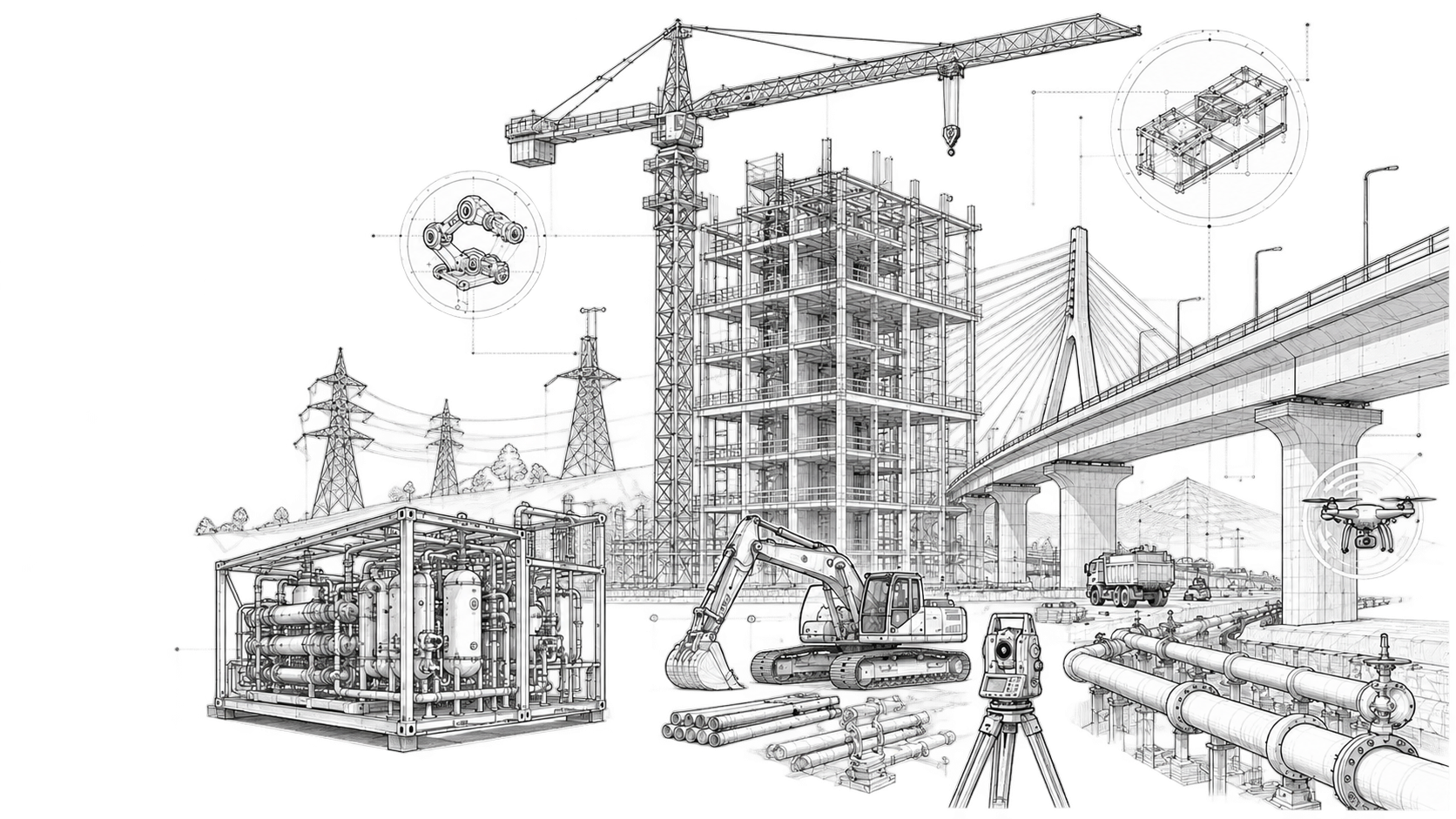
Infrastructure and EPC systems shown in technical X-ray linework

The operating reality

The overrun is not one mistake. It is one slip, compounding, unseen.

The overrun is never the event people blame. It is not the weather, the ground condition or the change order. Those are triggers. The overrun is what the project did or failed to do in the days after the trigger, while the slip was still small enough to absorb. The root cause named in study after study is the same: the project had no mechanism to see the ripple forming and act on it before it compounded.

And it compounds because the three functions that build the project do not share a live truth. Engineering changes a detail. Procurement, working from the plan it was handed, orders to the old timeline too early and the material sits and degrades, too late and the crew stands idle waiting for it. Construction resequences around both, absorbing cost no one booked. Each function is doing its job correctly on the information it has. The information is simply out of date the moment it crosses the line between them.

None of this is a failure of the engineers, planners or contractors. It is the structural default of an industry whose tools were built to record each discipline’s status, never to close the loop between them while the outcome could still change. And here is the part that should be intolerable and is merely normal: every project relearns what the last one already paid to learn. The lesson bought at the price of the last overrun leaves with the team that lived it, and the next project buys it again.

Where the programme is won or lost

The calls that decide the milestone, made on yesterday’s truth.

The slip that is cheap on Tuesday and a claim by year-end

A dependency moves on the critical path and the window to resequence around it is measured in days. Miss the window and the same slip that cost a schedule reshuffle becomes a missed milestone, a liquidated-damages clause and a penalty running every day the project is late. The decision was cheap once. It is never cheap twice.

Procurement committed to a plan engineering already changed

Long-lead materials are ordered against the timeline as it stood at award, not as it stands today. When engineering moves and procurement does not hear it in time, capital is spent early on material that waits, or spent late on material that holds up the pour. The gap between the two functions is where the money leaks, invisibly, until it is counted.

Cost variance the project absorbs before anyone can name it

Rework, idle plant, out-of-sequence activity each is small, each is buried in a different cost code, and together they accumulate into the overrun that surfaces at review, after the quarter has absorbed it. No single report connected them while there was still a decision to make.

Ninety per cent complete, and still bleeding every day

The dashboard says the project is nearly done. The runway is laid, the structure is up. And the meter still runs, because “almost” does not open the asset, and the last stretch is exactly where the dependencies no one tracked come due at once. Visibility told you the percentage. It never told you the milestone would miss.

These are not four problems for four tools. They are one failure three functions deciding on stale versions of each other’s truth surfacing across schedule, procurement, cost and completion at once. No single discipline sees the whole chain, and no system on the project was ever built to.

The programme operating model

One loop across the whole programme and it catches the ripple, not the wreck.

Every system a project runs today is a rear-view mirror sold as a windshield. It records what each discipline did, with precision, and goes dark at the moment the disciplines needed to be one decision. Quantos is not that. It is an enterprise-grade, multi-tenant closed-loop intelligence system, and the loop does not break at the point a person takes over which is the exact point every project control fails.

It reads the programme as one live position engineering, procurement, construction, schedule and cost connected, not three disciplines reconciling stale plans at a weekly review. When a dependency slips, it does not wait for the report. It surfaces the forward exposure in rupees and days while resequencing can still change the milestone: this slip, left unaddressed, costs this much and lands here here is the resequence that holds the date, here is why the call has to be made now. That reasoning goes to an accountable owner with the evidence attached, and then the loop stays on the project. It checks whether the milestone held. It scores its own call against what actually happened. It keeps that record permanently so the lesson this project paid for is the lesson the next one inherits, instead of buying again.

This is not a scheduling tool, a project-controls dashboard or a better report. Those record the programme and stop. Quantos decides, proves and improves across every project in the portfolio as one. The industry has spent forty years getting better at describing why projects run over. Quantos closes the loop that stops them running over.

Evidence from your own programme

The overrun you booked, against the overrun the loop would have caught.

Read the incumbents’ own words. A project-controls platform promises visibility into progress so teams can catch issues before they escalate. A consultancy promises a cross-functional team of specialists to establish transparency of root causes. Every one of them ends at the same place: visibility, or a room of people, handed the status and left to decide on it. None of them checks what the decision then produced, whether it held the date, or what the slip that got past it cost. None of them closes the loop because none of them was built to hold engineering, procurement and construction as one live truth.

Quantos holds the forecast, the resequence it recommended, whether the project acted, and what the milestone then did across every project. So it can show the one thing no controls system can: the cost and delay the programme actually carried, against the cost and delay it would have carried had every call been made while the slip was still small. The distance between them is the overrun the open loop let through, drawn in the project’s own money and its own days not an estimate, not a benchmark, the exposure that was really there and really missed.

And the shape is the whole horror of this industry. The gap widens, and it widens faster than anywhere else, because a slip left unscored does not repeat next season it cascades this project, function to function, until a decision that would have cost a week’s resequence costs a penalty metered in lakhs a day and defended in arbitration for years. Quantos holds one discipline here without exception: the gap is shown, not filled. It never invents a flattering version of the programme’s history. It shows, with evidence, the overrun that was truly avoidable because on a project where delay is a contractual meter, an answer you can put in front of a court is the only one worth having.

Proof on your own programme, not a projection

We do not ask you to trust a forecast. We replay your last project, decision by decision.

A forecast is a claim about a future you can argue with. Quantos offers something no argument survives: your own project’s history, replayed. Run the loop backward across the programme you have already delivered, and watch every call it would have made appear in sequence the dependency slip flagged the week it moved, not the month it surfaced; the procurement order caught before it was placed against a plan already changed; the milestone named as at-risk while there was still a resequence that held it. Each one timestamped ahead of the overrun it saw coming.

This is not a demonstration built on our data. It is built on yours, and it settles the only question a contractor or an owner actually asks: not “can this system schedule,” but “would it have held the date on my project, on the slip that actually cost me the milestone.” The loop scores itself against what truly happened, in the open, and lets you judge the record before you ever stake a programme on it. No other system can offer that, because no other system held the three functions as one live truth long enough to have the record.

Where Quantos sits

Your systems remain. Quantos closes the loop above them.

Quantos does not ask a contractor to replace anything. The scheduling software, the project-controls suite, the ERP and cost systems, the document and engineering platforms they stay, and they stay the systems of record. They were built to plan, track and report, and they do it well. What they were never built to do is hold engineering, procurement and construction as one live truth and carry the decision forward: to see the ripple, decide while it still matters, measure the milestone, score the call, and keep the lesson when the team that learned it moves to the next job.

That layer has simply never existed. It exists now, it is the only thing Quantos adds, and it is deterministic, governed and evidenced end to end no black box, no fabricated output, every call defensible to a client, a board and a court. It sits above the stack you already own, works from the data you already approve, and closes the loop those systems leave open between the slip and the response. You keep everything you have built and gain the layer that makes a programme act on its own truth in time.

For the people who carry the date and the penalty

What programme leadership asks first.

Is this a scheduling or project-controls tool?

No. Controls record status and hand it to a person. Quantos closes the loop surfaces the forward exposure in rupees and days while resequencing still changes the milestone, drives the decision, scores it against what happened and corrects the next. Status is where they end. It is where Quantos begins.

Why do projects overrun even with the best planning software?

Because engineering, procurement and construction each decide on stale versions of each other’s truth, and small slips compound unseen into overruns that only surface as a claim. Existing tools give visibility and hand the decision to a person on out-of-date information. Quantos closes the loop between the ripple and the response.

Can it run across our whole portfolio of projects?

Yes. Quantos is enterprise-grade and multi-tenant built to run many projects as one, and to carry the lessons of one into the next instead of relearning them. Each project keeps its own reality; leadership finally sees the portfolio whole, on one loop.

How do we defend a call we cannot see inside?

You do not have to. Quantos is deterministic every call traceable to its evidence, reproducible, governed. No black box, no hallucination. On a project where delay is metered in lakhs a day and settled in arbitration, an answer you can put in front of a court is the only one worth acting on.

Quantos Systems · Infrastructure & EPC

Every loss sent a signal first.Nothing was built to act on it.Now something is.