Offerings / Industries

Quantos for Cement

Cement is the hardest kind of product to make money on: too heavy to travel far, too cheap to store long, sold by the tonne at a margin measured in a few hundred rupees. That physical reality forces the whole business into a live, three-way squeeze. Energy mostly imported petcoke and grid power is half the cost and swings with global markets. Freight is another quarter of it, moving with diesel and the availability of rail rakes, and it caps how far a tonne can profitably travel. And the price at the other end is regional, fragmented and fiercely competitive, so it cannot simply be raised to cover the other two. The margin on every tonne is decided by which plant serves which market, on which fuel, by which mode and all three move before the tonne is sold. Quantos is the one loop that closes the distance between those moving constraints and the decision before the squeeze becomes the loss.

See the margin the squeeze takes per tonne
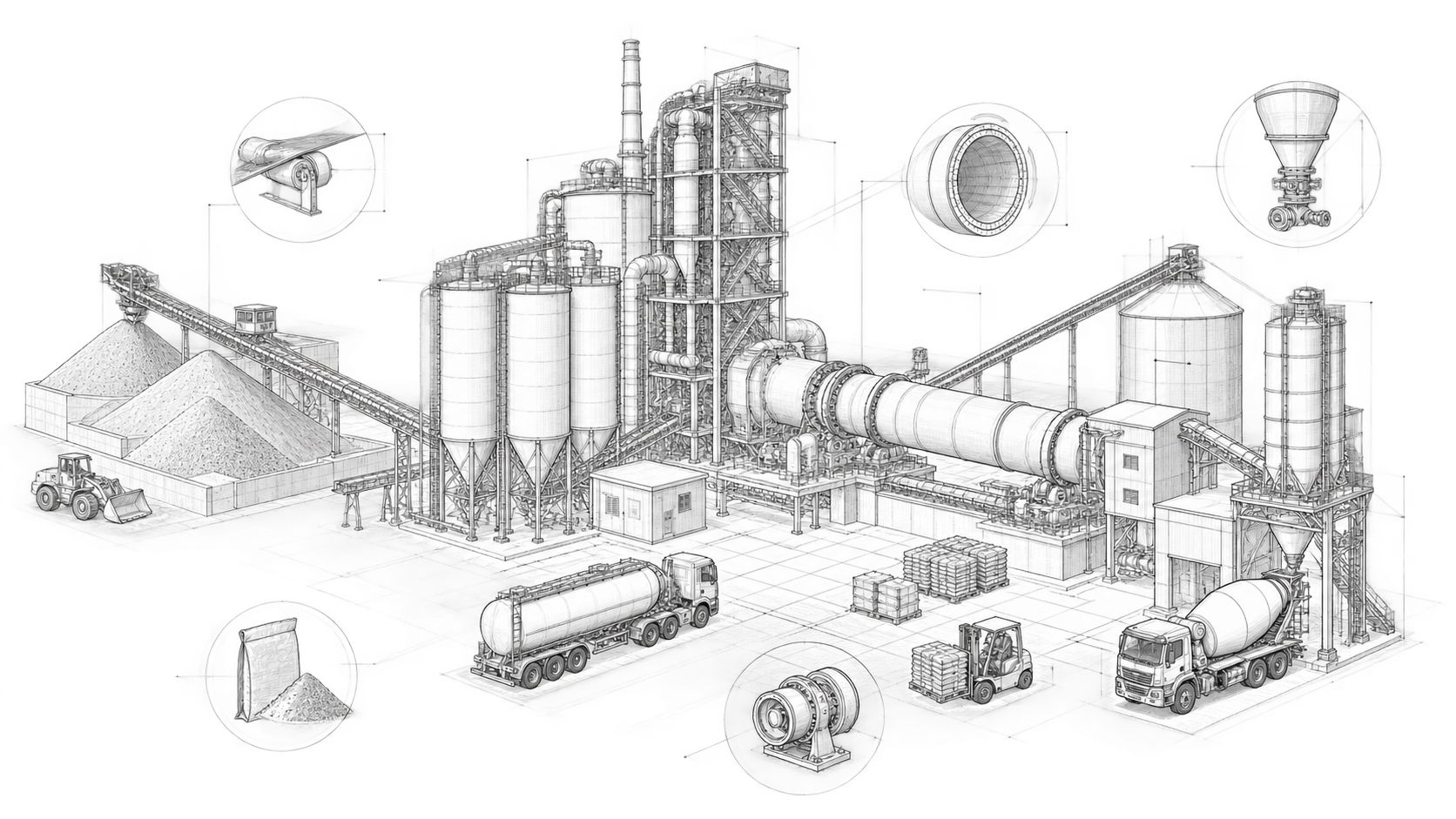
Cement production operations shown in monochrome technical linework

The operating reality

Three moving costs, one thin margin, decided before the tonne ships.

Every cement producer lives inside the same physics. The product is heavy and cheap, so freight is not a line item it is a boundary. A tonne can only travel so far before the cost of moving it eats the margin of making it, which means every plant has a natural market radius, its lead distance, and profitability depends on serving the right one. Get the geography wrong serve too far, dispatch by the wrong mode, miss a rake and a tonne that was margin-positive at the kiln is margin-negative at the customer.

Inside that boundary, two of the three big costs are volatile and largely outside the producer’s control. Energy is roughly half the operating cost and much of the fuel is imported petcoke, so a geopolitical shock or a currency move lands directly on the cost of clinker. Freight moves with diesel and the availability of rail, the cheaper mode that much of the network cannot even reach. And the third number, price, is the one lever the producer might use to absorb the other two except it is set regionally, fragmented across markets, and held down by intense competition and waves of new capacity. The producer is squeezed from three directions and can firmly control none of them.

None of this is a failure of the plant managers, the logistics teams or the sales network. It is the structural default of an industry whose systems plan the cost in one place, run the kiln in another, schedule the dispatch in a third and price by region in a fourth and reconcile the whole into a margin per tonne only at the month close. The kiln-run, the fuel mix, the dispatch mode and the market allocation are each committed against energy, freight and price numbers that all move before the tonne is sold, and no system closes the loop between those moving constraints and the decision while there is still a decision to change.

Where margin per tonne is won or lost

The calls that decide the tonne, made against three numbers still moving.

The tonne dispatched too far to earn its margin

A market is served from a plant beyond its economic lead distance, or by road when rail was cheaper, and the freight quietly consumes the margin the kiln earned. The allocation looked fine on volume and missed the per-tonne economics entirely. The signal that a nearer plant or a cheaper mode would have held the margin was there before the dispatch; nothing connected it to the decision.

The kiln run on a fuel mix that was no longer the cheapest

The fuel blend is set for the run on the economics as they stood, and petcoke, coal or alternative- fuel prices move before the clinker is made. A blend that was optimal when it was charged is expensive by the time it burns, spreading cost across every tonne of that run an energy leak invisible per tonne and decisive per quarter, unconnected to the margin while there was still a run to optimise.

The rake missed and the dispatch bumped to costlier road

Rail is far cheaper than road, but only a fraction of dispatch moves by rail because rake availability is tight and must be planned against. A missed allocation forces the tonne onto the road at a higher cost, or strands it in inventory, and the freight penalty lands on a margin that had no room for it. The window to secure the rake closed before the shortfall was visible.

A network seen only when margin per tonne is reconciled

Leadership sees OPBIDTA per tonne, lead distance and regional realisation in the monthly review, in arrears, when every kiln, fuel, dispatch and allocation decision that picture would have informed is already made. The network is run on a rear-view of itself precise about last month’s margin per tonne, blind to the squeeze forming on the tonne it is committing right now.

These are not four problems for four tools. They are one failure a thin per-tonne margin decided against three moving costs in separate systems surfacing across energy, freight, allocation and price at once. No single system sees the tonne from the kiln to the customer as one margin, and none of them was ever built to.

What Quantos is

One loop from the kiln to the customer closing the gap the squeeze opens.

Every system a cement producer runs today holds one lever of the squeeze. The ERP plans the cost. The plant DCS runs the kiln and the grinding. The logistics or transport-management system schedules the dispatch. The sales and BI layer reports the regional realisation. Each is excellent at its lever, and each hands its number to a person after the tonne it describes is already committed. They run the kiln and move the tonne; not one of them closes the loop between the energy, freight and price signals moving together and the decision that sets the margin on the next tonne.

Quantos is that loop. It sits above the stack you already run and reads the network as one live position demand, energy cost, fuel mix, kiln run, lead distance, freight mode, rake availability and regional price connected, not a plant control room and a monthly costing that meet after the tonne is sold. It carries the forward per-tonne consequence of a decision to the moment it lands: this market is being served beyond its economic lead distance, this fuel blend is no longer the cheapest for this run, this dispatch belongs on rail before the rake window closes here is the correction, here is the margin per tonne it protects, here is why it has to be made now, before the month. It hands that call, with the evidence, to the accountable owner and where the decision is safety-critical kiln or plant operation, it stays with qualified authority. It watches what the tonne then earned. It scores its own call against the realised margin per tonne. It learns how energy, freight and allocation turn into margin. And it corrects the next cycle, so the tonne you commit is set against the squeeze it will actually meet.

This is not a better ERP, a smarter DCS or another logistics dashboard it is not a cement point- solution at all. It is a deterministic closed-loop intelligence system, and cement is simply the environment where the margin per tonne is thinnest and the three costs that decide it move most. Those systems run the kiln and move the tonne, and stop. Quantos decides, proves and improves across the whole network as one. The industry has spent a decade getting better at running the plant and reporting the margin. Quantos closes the loop between them.
The proof no competitor can draw

The margin per tonne you earned, against what the loop would have held.

Read the incumbents’ own words. An ERP plans the cost. A DCS runs the kiln. A logistics system schedules the dispatch. A BI tool reports the realisation. Every one of them ends at the same place: a plan, a set-point, a schedule, or a number, handed to a person after the tonne is already committed. None of them checks whether the kiln, fuel and dispatch calls held the margin, scores itself against the realised margin per tonne, or corrects the next run. None of them closes the loop because none of them holds the tonne from the kiln to the customer as one margin.

Quantos holds the call it made on the fuel, the run and the allocation, whether the producer acted, and what the tonne then earned. So it can show the one thing no plant or logistics system can: the margin per tonne the network actually held, against the margin it would have held had every call been made while the squeeze could still be answered. The distance between them is the margin the open loop let through the freight overspent, the fuel misjudged, the market served too far drawn in the producer’s own money per tonne, not an estimate, not a benchmark, the margin that was really there and really recoverable.

And the shape is the whole cost of a thin margin under a moving squeeze. The gap widens, because a misallocated market or a misjudged fuel run is not one bad tonne it is the same blind spot, repeating across every tonne that shares it, on a margin already thin and a cost base always moving. Quantos holds one discipline here without exception: the gap is shown, not filled. It never invents a flattering version of the network’s history. It shows, with evidence, the margin per tonne that was truly there to hold because when the margin is a few hundred rupees and every cost line moves, a decision you can audit is the only one worth acting on.

Why this cannot be answered by a better logistics tool

Three things no rear-view system can do, at any price.

It draws the world that did not happen

Because Quantos alone holds the call it made, whether you acted on it and what the tonne then earned, it can show the margin per tonne you would have held had every call answered the squeeze against what the network actually earned. No ERP, no DCS, no logistics tool can draw that line, because none of them carries the outcome of its own advice. It is the one view in the network a competitor cannot copy, because copying it means closing the loop, and they have not.

It keeps a scored record of every call it ever made

Every fuel, run and allocation call, and whether it held the margin per tonne, kept permanently a provable track record of the system’s own judgement, run after run, market after market. Not a monthly costing that closes and is filed, but an accumulating body of evidence that says, in your own margin per tonne, here is what we called and here is how it earned. No plant or logistics system can produce it, because none of them ever kept the score of its own decisions.

It is the only system that gets better as the squeeze tightens

Your ERP and logistics tools are exactly as good today as the day they were configured, while the squeeze they operate in tightens every cycle with fuel, freight and capacity. Quantos moves the other way. Every cycle it scores its own call, learns how energy, freight and allocation turn into margin and corrects the next so the tonne it protects this quarter earns more, under the same squeeze, than the one it protected last quarter. It compounds. A rear-view system decays against a tightening squeeze. Quantos improves against it.

This is why Quantos is not a better cement tool. It is a different category of enterprise intelligence a deterministic closed loop that decides, proves and improves and a plant network is simply where the loop it closes is worth a few hundred rupees on every tonne.

Proof on your own network, not a projection

We do not ask you to trust a forecast. We replay your last year, tonne by tonne.

A forecast is a claim about a future you can argue with. Quantos offers something no argument survives: your own network’s history, replayed. Run the loop backward across the year the network has already dispatched, and watch every call it would have made appear in sequence the market flagged as served beyond its economic lead distance; the fuel blend named as no longer cheapest before the run; the dispatch caught before it was bumped from rail to road. Each one timestamped ahead of the margin per tonne it saw eroding.

This is not a demonstration built on our data. It is built on yours, and it settles the only question a cement leader actually asks: not “can this system schedule,” but “would it have held the margin on my network, on the tonne that actually lost it to freight or fuel.” The loop scores itself against the margin per tonne that truly landed, in the open, and lets you judge the record before you ever run the network on it. No other system can offer that, because no other system held the tonne from the kiln to the customer as one margin long enough to have the record.

Where Quantos sits

Your systems remain. Quantos closes the loop above them.

Quantos does not ask a producer to replace anything. The ERP, the plant and DCS systems, the logistics and transport-management stack, the sales and BI layer they stay, and they stay the systems of record. They were built to plan, run, move and report, and they do it well. And the decisions that must stay with qualified people how a kiln is operated, when a plant is halted remain entirely with the plant’s authorised authority. Quantos surfaces and governs; it does not take those calls.

What the existing stack was never built to do is hold the tonne from the kiln to the customer as one margin and carry the decision forward: to connect the energy, freight and price signals to the kiln, fuel and dispatch decision, decide while the run can still change, measure the margin per tonne, score the call, and keep the lesson when a plant manager leaves. That layer has simply never existed. It exists now, it is the only thing Quantos adds, and it is deterministic, governed and evidenced end to end no black box, no fabricated output. The producer keeps everything it has built and gains the layer that answers the squeeze before it becomes the loss.

For the people who own margin per tonne

What cement leadership asks first.

Is this an ERP, plant-control or logistics system?

No. Those plan the cost, run the kiln and schedule the dispatch, each on its own lever. Quantos closes the loop across them connects the energy, freight and price signals to the kiln, fuel and dispatch decision to the per-tonne outcome, surfaces the forward squeeze in money per tonne while the run can still change, drives the decision, scores it and corrects the next cycle. Running and scheduling are where they end. It is where Quantos begins.

Why is our margin decided by geography?

Because cement is heavy and cheap, so it cannot travel far or store long. A plant serves a limited radius, and margin per tonne turns on three moving costs at once energy, freight and a fragmented regional price. Which plant serves which market, on which fuel, by which mode, decides it, and all three move before the tonne is sold. Quantos closes the loop between them.

Can it run across our plant network and regions?

Yes. Quantos is enterprise-grade and multi-tenant built to run a whole plant and grinding network across every region as one forward position, not systems reconciled after the month. Each plant keeps its reality; the producer finally sees energy, freight, lead distance and realisation on one loop.

How do we act on a call we cannot see inside?

You do not have to. Quantos is deterministic every call traceable to its evidence, reproducible, governed, and safety-critical kiln operations left with qualified authority. No black box, no hallucination. When margin per tonne is thin and every cost line moves, a decision you can audit is the only one worth acting on.

Quantos Systems · Cement

Every loss sent a signal first.Nothing was built to act on it.Now something is.