Offerings / Industries

Quantos for Aviation & MRO

An aircraft on the ground can cost up to a hundred and fifty thousand dollars an hour, and one grounded tail cascades across five routes missed connections, repositioned crew, compensated passengers. And here is what makes it avoidable and infuriating: the signal that the failure was coming existed in the data before the aircraft was ever grounded. The health trend, the removal-rate drift, the deferred item ticking toward its limit all there, before the AOG. But the systems react at the ground event, not the signal, and once the tail is down, recovery collides with a fragmented ecosystem and a spare-parts supply chain now measured in months. So a fix that could have been a planned overnight task becomes a multi-day ground event. Quantos is the one loop that closes the distance between the signal and the intervention before the tail is grounded, under qualified authority, every call auditable.

See the grounding you could have planned away
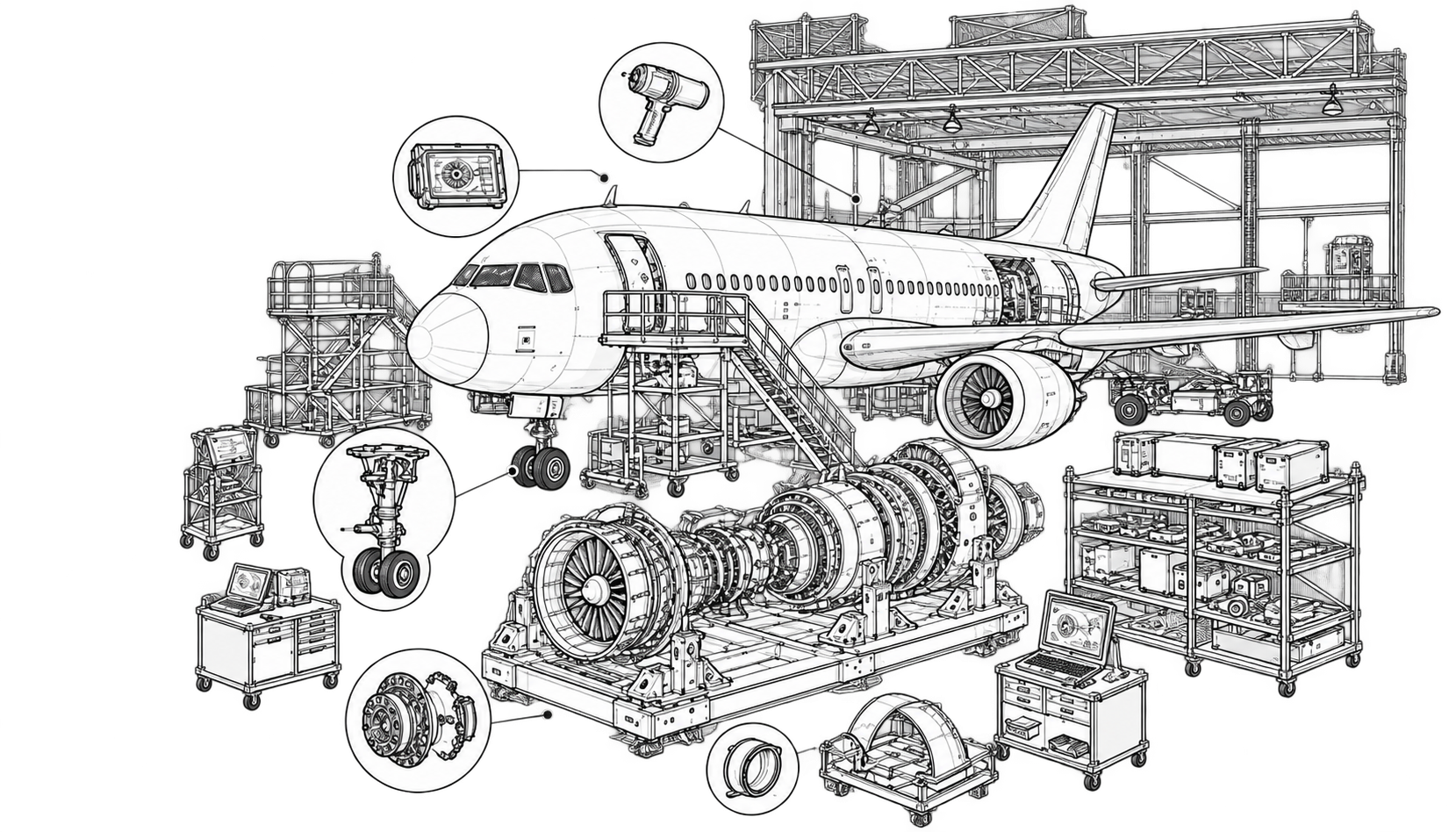
Aviation and MRO systems line drawing

The operating reality

The signal formed before the AOG. The system reacted at it.

Aviation runs on the most expensive wait in industry. When an aircraft is grounded, the operational clock starts, and it does not stop for anything every hour is lost revenue, crew disruption and passenger compensation, and the number climbs into six figures for a widebody on the wrong route. Worse, the event does not stay contained: one grounded tail ripples across the schedule in minutes, and a single AOG cascades through five routes before operations has finished the first phone call.

But the failure did not begin at the grounding. It began in the signal that formed before it the engine health parameter trending out of band, the component whose removal rate was drifting, the deferred item on the minimum-equipment list quietly counting down to the moment it grounds the aircraft. That signal lives in the fleet’s own data while the tail is still flying. The window to act on it to schedule the work into planned downtime, to pre-position the rotable, to book the slot before the queue closes is open while the signal is forming and gone the moment the aircraft is on the ground. And once it is, recovery collides with a fragmented ecosystem of airline, MRO, OEM and regulator, and a spare-parts market where lead times that were four to six weeks are now twenty to forty, so the part that would end the grounding is months away.

None of this is a failure of the engineers, the maintenance controllers or the planners. It is the structural default of an industry whose systems were built to monitor an aircraft, track a part and record a task, never to close the loop between the forming signal and the planned intervention while the tail was still flying. And the judgement a veteran maintenance controller has for which signal will ground a fleet leaves with them, so the operation relearns it at the price of the AOG hours in between.

Where availability and cost are won or lost

The calls that decide the grounding, made after it starts.

The overnight fix that became a multi-day AOG

A health signal trends out of band while the aircraft is still flying, and the work it points to could be scheduled into a night stop with the part pre-positioned. Acted on only when it grounds the tail, the same task becomes an unplanned AOG at six figures an hour, chasing a part that is now weeks away. The window to plan it was open and unwatched; the grounding it became was booked in full.

The rotable that was in the wrong place at the wrong time

The part that would end a grounding exists in another base, another aircraft, a supplier’s warehouse a continent away and the match that would have positioned it ahead of need was never made, because demand and inventory lived in separate systems. So the aircraft waits on an expedited shipment or a technical robbery from another tail, and the cost of not pre-positioning is paid in AOG hours.

The hangar slot that closed before the work was queued

A check or a component overhaul is coming due, and the slot to do it has a booking window that closes well ahead of the need. Miss it, and unscheduled work cascades into a multi-week wait because no shop can absorb it turnaround inflating as the whole network runs at its ceiling. The removal-rate trend that would have queued the work in time surfaced too late to book against.

A fleet seen only when the disruption is already counted

Operations sees dispatch reliability, AOG hours and turnaround in the daily and monthly report, in arrears, when every intervention, positioning and slot decision that picture would have informed is already made or missed. The fleet is run on a rear-view of itself precise about last month’s groundings, blind to the one forming on a tail in the air right now.

These are not four problems for four tools. They are one failure a signal acted on at the ground event instead of before it surfacing across maintenance, rotables, slots and schedule at once. No single system connects the forming signal to the planned intervention, and none of them was ever built to.

Fleet availability operating model

One loop across the whole fleet closing the gap between the signal and the ground event.

Every system an operator runs today acts on one part of the problem. The M&E or MRO platform the AMOS or the TRAX plans and records the maintenance. The health-monitoring tool flags the component. The parts system tracks the rotable. The operations system holds the schedule. Each is excellent in its silo, and each hands its output to a person after the signal it holds has already become an event. They monitor the aircraft and track the part; not one of them closes the loop between the signal that a failure is forming and the planned intervention that keeps the tail flying.

Quantos is that loop. It sits above the stack you already run and reads the fleet as one live position aircraft health, component life, rotable location, hangar slots and schedule connected, not a monitoring tool and a maintenance plan that meet at the disruption. It does not wait for the AOG. It catches the forming signal and surfaces the forward risk in ground hours and money while the fix can still be planned: this trend grounds this tail in this window, schedule it into that night stop and pre-position the part now; this rotable belongs at that base before that removal; this slot must be booked before the queue closes. It hands that call, with the evidence, to the licensed engineers and controllers who own it it does not make the airworthiness determination, it does not sign off the work, it does not defer the MEL item, it does not replace the regulator’s authority. It watches what the tail then did. It scores its own call against the AOG that was avoided or incurred. It learns which signals truly precede a grounding. And it corrects fleet planning and rotable positioning for the next cycle, so the availability you fly on is sharpened by every signal the last cycle scored. The controller’s instinct for a grounding stays with the operation, not the individual.

This is not a better M&E system, a smarter health monitor or another parts tool it is not an aviation point-solution at all. It is a deterministic closed-loop intelligence system, and aviation is simply the environment where the cost of the event is most punishing by the hour and the recovery most fragmented. Those systems monitor and track, and stop. Quantos decides, proves and improves across the whole fleet as one. The industry has spent a decade getting better at monitoring the aircraft. Quantos closes the loop that keeps it flying.

Evidence from the fleet record

The availability you lost, against the availability the loop would have held.

Read the incumbents’ own words. An M&E system plans the maintenance. A health monitor flags the component. A parts platform tracks the rotable. An ops system reports dispatch reliability. Every one of them ends at the same place: a plan, a flag, or a number, handed to a person after the signal it held has become an event. None of them checks whether the intervention was planned in time, scores itself against the AOG, or corrects the fleet plan. None of them closes the loop because none of them holds the aircraft from the forming signal to the ground event as one.

Quantos holds the signal it flagged, the intervention it recommended, whether the operator acted, and what the tail then did. So it can show the one thing no M&E or monitoring system can: the availability and the cost the fleet actually carried, against the availability and cost it would have carried had every signal been planned against while the tail was still flying. The distance between them is the AOG the open loop let through drawn in the operator’s own ground hours and money, not an estimate, not a benchmark, the availability that was really there and really recoverable.

And the shape is the whole exposure of a grounded asset. The gap widens, because a signal missed on one tail is not one AOG it is the same blind spot, repeating across every aircraft that shares the pattern, cascading through the schedule each time, on lead times measured in months. Quantos holds one discipline here without exception: the gap is shown, not filled. It never invents a flattering version of the fleet’s history. It shows, with evidence, the availability that was truly there to hold because when a grounded tail costs six figures an hour, an answer you can audit is the only one worth acting on.

Why this cannot be answered by a better monitor

Three things no rear-view system can do, at any price.

It draws the world that did not happen

Because Quantos alone holds the signal it flagged, whether you acted on it and what the tail then did, it can show the availability you would have held had every signal been planned against in time against what the fleet actually flew. No M&E system, no health monitor, no parts tool can draw that line, because none of them carries the outcome of its own advice. It is the one view in the operation a competitor cannot copy, because copying it means closing the loop, and they have not.

It keeps a scored record of every call it ever made

Every signal, every intervention, and whether it was right, held permanently a provable track record of the system’s own judgement, cycle after cycle, built to the evidentiary standard a regulator expects. Not a report filed after each disruption, but an accumulating body of evidence that says, in your own fleet, here is what we called and here is how the tail flew. No monitoring or planning system can produce it, because none of them ever kept the score of its own decisions.

It is the only system that gets better every cycle

Your M&E and monitoring tools are exactly as good today as the day they were configured. Quantos is not. Every cycle it scores its own call, learns which signals truly precede a grounding and sharpens fleet planning and rotable positioning so the availability it protects this quarter catches groundings the one last quarter would have missed. It compounds. A rear-view system can only ever report the AOG after it lands. Quantos closes the gap that lets it happen.

This is why Quantos is not a better aviation tool. It is a different category of enterprise intelligence a deterministic closed loop that decides, proves and improves and a fleet is simply where the loop it closes is worth a hundred and fifty thousand dollars an hour.

Proof on your own fleet, not a projection

We do not ask you to trust a forecast. We replay your last year, tail by tail.

A forecast is a claim about a future you can argue with. Quantos offers something no argument survives: your own fleet’s history, replayed. Run the loop backward across the year the operation has already flown, and watch every call it would have made appear in sequence the health signal flagged as grounding-bound before the tail was down; the rotable named for the base it would be needed at; the slot caught before the queue closed. Each one timestamped ahead of the AOG it saw coming.

This is not a demonstration built on our data. It is built on yours, and it settles the only question a Director of Maintenance actually asks: not “can this system monitor,” but “would it have held the availability on my fleet, on the tail that actually cost me the AOG.” The loop scores itself against the dispatch reliability that truly landed, in the open, and lets you judge the record before you ever fly the fleet on it. No other system can offer that, because no other system held the aircraft from signal to ground event as one long enough to have the record.

Where Quantos sits

Your systems remain. Quantos closes the loop above them.

Quantos does not ask an operator to replace anything. The M&E and MRO platform, the health- monitoring tools, the parts and rotable systems, the operations and scheduling stack they stay, and they stay the systems of record. They were built to plan, monitor, track and record, and they do it well. And the decisions that must stay with qualified people and their regulator airworthiness determination, maintenance sign-off, MEL deferral, release to service remain entirely with the licensed engineers and the CAMO, under DGCA, EASA and FAA authority. Quantos makes none of them.

What the existing stack was never built to do is hold the aircraft from the forming signal to the ground event as one and carry the decision forward: to connect the health signal to the planned intervention, decide while the tail is still flying, measure the availability, score the call, and keep the lesson when a controller leaves. That layer has simply never existed. It exists now, it is the only thing Quantos adds, and it is deterministic, governed and evidenced end to end no black box, no fabricated output, every call auditable to leadership and the regulator alike. The operation keeps everything it has built and gains the layer that acts on the signal before it becomes the grounding.

For the people who own fleet availability

What aviation leadership asks first.

Is this an M&E, MRO or predictive-maintenance system?

No. Those plan, monitor and track in their own silos, and act at the event. Quantos closes the loop across them connects the forming signal to the planned intervention before the AOG, prices the forward risk in ground hours and money while the fix can still be scheduled, drives the decision under qualified authority, scores it against the AOG and corrects fleet planning. Monitoring is where they end. It is where Quantos begins.

Why does a preventable failure still become an AOG?

Because the signal forms before the ground event but is acted on only at it. The trend and the deferred item sit in the data before the tail is down, but nothing connects them to a planned fix. Once grounded, recovery hits a fragmented ecosystem and months-long part lead times. Quantos closes that loop before the tail is grounded.

Can it run across our whole fleet and bases?

Yes. Quantos is enterprise-grade and multi-tenant built to run the whole fleet and every base as one loop of aircraft health, rotable position, slots and schedule. Each aircraft keeps its reality; operations finally sees fleet availability as one forward position.

Does Quantos make airworthiness or sign-off decisions?

No. Airworthiness, maintenance sign-off, MEL deferral and release to service stay entirely with licensed engineers and the CAMO, under DGCA, EASA and FAA authority. Quantos surfaces the risk, governs the coordination and planning around it, and scores the outcome. It closes the loop; it does not remove the engineer or the regulator from it.

Quantos Systems · Aviation & MRO

Every loss sent a signal first.Nothing was built to act on it.Now something is.