Offerings / Industries

Quantos for Retail & Fashion

You commit the buy months before the season, on a single guess about a trend that may not survive to launch. From the moment the stock lands, its value decays against a clock you do not control a style ages, a colour cools, a size curve turns out wrong and the one lever that recovers margin, the markdown, is almost always pulled too late. Not through carelessness: the sell-through signal that should trigger it surfaces after the week is already booked, so by the time a planner sees the number, the window to protect margin has closed. Quantos is the one loop that closes the distance between the signal and the price call while margin remains, across every channel as one.

See the margin you marked down too late
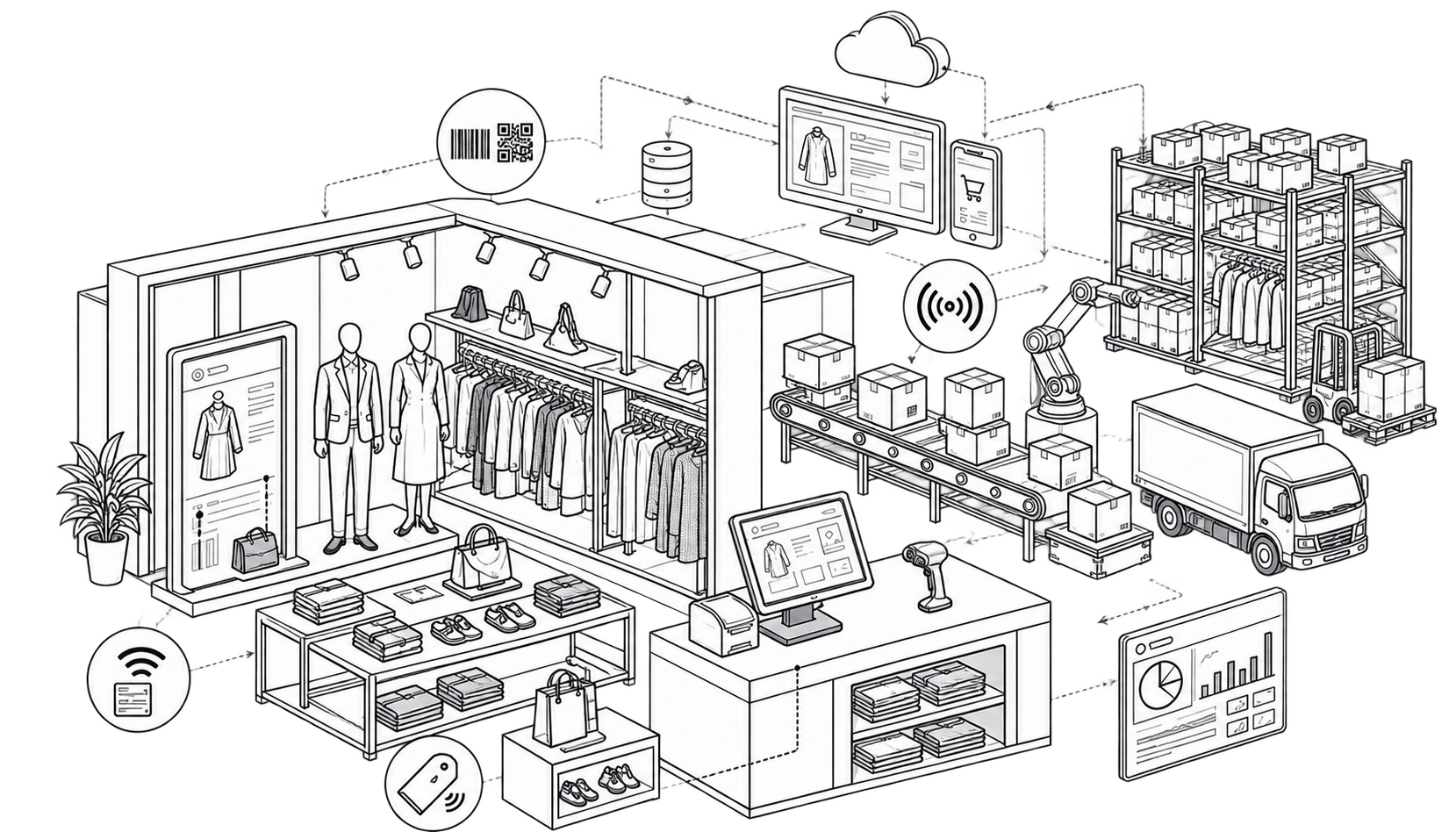
Retail and fashion systems line drawing

The operating reality

The stock decays in real time. The decision to act arrives after the week.

Fashion inventory is not a stable asset. It is a decaying one, priced against a trend that expires and the whole economics of a collection turn on a single timing gap. The buy is committed a season ahead, on one estimate of demand, for a product that can look certain in the range review and underperform the moment it reaches the floor. A colour does not sell. A size curve is wrong. A trend peaks two weeks early. From that point the stock loses value every day it sits, and the only lever left is price.

And that lever is pulled late, every season, for a structural reason. The signal that a style is missing its sell-through forms in the first days on the floor, but it surfaces to the people who can act on it after the week is reconciled in the report, not in the moment. By the time the markdown is approved, the trend has cooled further and the discount has to be deeper to clear the same stock, turning a margin that a timely call would have protected into a clearance loss. Full-price sell-through has collapsed across the industry precisely because the decision to protect it always arrives a beat too late.

None of this is a failure of the buyers, merchandisers or planners. It is the structural default of an industry whose systems were built to forecast the buy and report the sell-through, never to close the loop between the signal and the price call while margin was still there to protect. It is made worse by teams that decide in sequence merchandising, sourcing, pricing, logistics each acting on its own slice and by a single demand forecast stretched across stores, own e-commerce and marketplaces that is wrong in all three at once. And the instinct a great buyer has for when a style is dying leaves with them, so the next season relearns it at the price of the margin marked down in between.

Where sell-through and margin are won or lost

The calls that decide the season, made after the week is booked.

The markdown that clears at a loss a timely call would have avoided

A style misses its sell-through in week one, the signal surfaces in the week-two report, and the markdown is approved in week three by which point the trend has cooled and the discount must be deeper to move the same units. The margin a two-week-earlier call would have protected is gone, converted into a clearance loss nobody chose and everybody booked.

The reorder placed on a hit that has already peaked

A style sells out fast and the instinct is to chase it, but the reorder lands weeks later, after the viral moment has passed, adding fresh stock to a trend already cooling a full-price hope that becomes next month’s markdown. The window to chase a winner is as narrow as the window to cut a loser, and the signal to judge it arrives just as late.

The size and channel mix that strands stock where it will not sell

The same style sells through in one channel and dies in another, in one size and not the next, and the allocation that would move stock to where demand actually is has a window measured in days. Held in the wrong store, the wrong channel, the wrong size, good stock ages into obsolescence while a sale it could have made goes unserved elsewhere.

An assortment seen only when the season is closed

Leadership sees sell-through, margin and markdown depth in the end-of-season review, in arrears, when every price, reorder and allocation decision that picture would have informed is already made or missed. The assortment is run on a rear-view of itself precise about last season’s obsolescence, blind to the margin decaying on the floor right now.

These are not four problems for four tools. They are one failure a decision that arrives after the signal that should have triggered it surfacing across markdown, reorder, allocation and obsolescence at once. No single team sees the style from buy to clearance, and no system in the business was ever built to.

Seasonal margin operating model

One loop from the buy to the clearance acting on the signal while margin remains.

Every system a retailer runs today sits on one side of the timing gap. A merchandise- planning suite forecasts the buy. A demand-forecasting tool reports the sell-through. An OMS and WMS move the stock. The ERP the SAP or the Oracle and the BI layer report the margin after the season. Each is excellent at forecasting or recording its own stage, and each hands its number to a person after the week that produced it has closed. They forecast the buy and report the result; not one of them closes the loop between the signal and the price call while there is still margin to protect.

Quantos is that loop. It sits above the stack you already run and reads the assortment as one live position buy, sell-through, size curve, channel, price and margin connected, not a planning suite and a season report that meet at the review. It does not wait for the week to be booked. It catches the sell-through signal as it forms and surfaces the call while it still pays: this style is missing its curve, mark it here and hold this much margin; this one is a genuine winner, chase it now before it peaks; this stock is stranded, move it to the channel and size where demand actually is. It hands that call, with the evidence, to the accountable owner. It watches what the stock then did. It scores its own call against the sell-through and the margin that landed. It learns how a style’s early signal turns into its season outcome. And it corrects the next buy, so the guess you commit a season ahead is sharpened by every signal the last season scored. The buyer’s instinct for a dying style becomes the institution’s, not the individual’s.

This is not a smarter planning suite, a better demand model or another markdown tool it is not a retail point-solution at all. It is a deterministic closed-loop intelligence system, and fashion is simply the environment where the asset decays fastest and the window to protect its margin is shortest. Those systems forecast the buy and report the sell-through, and stop. Quantos decides, proves and improves across every channel as one. The industry has spent a decade getting better at forecasting demand and reporting the markdown. Quantos closes the loop between the signal and the price.

Evidence from the season

The margin you cleared away, against the margin the loop would have held.

Read the incumbents’ own words. A planning suite optimises the buy. A demand tool forecasts the sell-through. A markdown optimiser suggests a discount. An ERP reports the margin. Every one of them ends at the same place: a forecast, or a number, handed to a person after the week that made it has already closed. None of them checks whether the price call landed the margin it should have, scores itself against the sell-through, or corrects the next buy. None of them closes the loop because none of them carries the style from buy to clearance as one.

Quantos holds the call it made on the markdown, the reorder and the allocation, whether the retailer acted, and what the style then did. So it can show the one thing no planning or forecasting system can: the margin the assortment actually held, against the margin it would have held had every call been made while there was still margin to protect. The distance between them is the margin the open loop cleared away drawn in the retailer’s own money, not an estimate, not a benchmark, the margin that was really there and really recoverable, worth hundreds of basis points a season.

And the shape is the whole cost of a decaying asset. The gap widens, because a signal missed on one style is not one late markdown it is the same beat-too-late timing, repeating across every style in the range, every season, on an asset that loses value by the day. Quantos holds one discipline here without exception: the gap is shown, not filled. It never invents a flattering version of the season’s history. It shows, with evidence, the margin that was truly there to hold because when a markdown’s timing is worth hundreds of basis points, a price call you can audit is the only one worth acting on.

Why this cannot be answered by a better forecast

Three things no rear-view system can do, at any price.

It draws the world that did not happen

Because Quantos alone holds the call it made, whether you acted on it and what the style then did, it can show the margin you would have held had every markdown, reorder and move been made in its window against what the assortment actually held. No planning suite, no demand model, no markdown tool can draw that line, because none of them carries the outcome of its own advice. It is the one view in the business a competitor cannot copy, because copying it means closing the loop, and they have not.

It keeps a scored record of every call it ever made

Every markdown, reorder and allocation, and whether it held its margin, kept permanently a provable track record of the system’s own judgement, style after style, season after season. Not a season report that is filed and forgotten, but an accumulating body of evidence that says, in your own margin, here is what we called and here is how it sold. No planning or forecasting system can produce it, because none of them ever kept the score of its own decisions.

It is the only system that gets better every season

Your planning and forecasting tools are exactly as good today as the day they were configured. Quantos is not. Every season it scores its own call, learns how an early signal turns into a season outcome and sharpens the next buy so the guess you commit ahead of next season is tighter than the one you committed this season. It compounds. A rear-view system forecasts each season from scratch. Quantos carries every season’s lesson into the next.

This is why Quantos is not a better retail tool. It is a different category of enterprise intelligence a deterministic closed loop that decides, proves and improves and an assortment is simply where the asset it protects decays before you can act on it.

Proof on your own assortment, not a projection

We do not ask you to trust a forecast. We replay your last season, style by style.

A forecast is a claim about a future you can argue with. Quantos offers something no argument survives: your own assortment’s history, replayed. Run the loop backward across the season you have already traded, and watch every call it would have made appear in sequence the style flagged as missing its curve in week one, not confirmed dead in week six; the winner named while there was still time to chase it at full price; the stock caught before it stranded in the wrong channel. Each one timestamped ahead of the margin it saw decaying.

This is not a demonstration built on our data. It is built on yours, and it settles the only question a merchandising leader actually asks: not “can this system forecast,” but “would it have held the margin on my styles, on the collection that actually marked down at a loss.” The loop scores itself against the sell-through that truly landed, in the open, and lets you judge the record before you ever trade a season on it. No other system can offer that, because no other system held the style from buy to clearance as one long enough to have the record.

Where Quantos sits

Your systems remain. Quantos closes the loop above them.

Quantos does not ask a retailer to replace anything. The merchandise-planning suite, the demand- forecasting tool, the OMS and WMS, the ERP and BI stack they stay, and they stay the systems of record. They were built to plan the buy, forecast demand, move the stock and report the margin, and they do it well. What they were never built to do is hold the style from buy to clearance as one and carry the decision forward: to catch the sell-through signal, decide while margin can still be protected, measure the outcome, score the call, and keep the lesson when a buyer leaves.

That layer has simply never existed. It exists now, it is the only thing Quantos adds, and it is deterministic, governed and evidenced end to end no black box, no fabricated output. It sits above the stack you already own, works from the data you already approve, and closes the loop those systems leave open between the signal and the price. You keep everything you have built and gain the layer that acts on the signal while the margin is still there to hold.

For the people who own the margin

What retail leadership asks first.

Is this a planning or demand-forecasting system?

No. Those forecast the buy and report the sell-through, after the week has closed. Quantos closes the loop between the signal and the price surfaces the markdown, reorder or move while margin can still be protected, drives the decision, scores it against the sell-through and corrects the next buy. Forecasting is where they end. It is where Quantos begins.

Why does the markdown always land too late?

Because the buy is committed months ahead, the stock decays against a fast trend clock, and the sell-through signal surfaces after the week is booked. By the time a planner sees it, the window to protect margin has closed and the discount has to be deeper. Quantos surfaces the markdown while margin remains.

Can it run across stores, online and marketplaces?

Yes. Quantos is enterprise-grade and multi-tenant built to run every channel as one, so a style is judged on its true cross-channel position, not a single forecast wrong in all three. Each channel keeps its reality; the retailer finally sees the whole assortment as one forward position.

How do we act on a call we cannot see inside?

You do not have to. Quantos is deterministic every call traceable to its evidence, reproducible, governed. No black box, no hallucination. When a markdown’s timing is worth hundreds of basis points, a price call you can audit is the only one worth acting on.

Quantos Systems · Retail & Fashion

Every loss sent a signal first.Nothing was built to act on it.Now something is.